
The Rise of Edge Computing in Industrial IoT Deployments
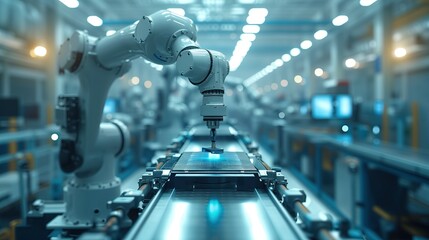
The Rise of Edge Computing in Industrial IoT Deployments
Introduction
In the rapidly evolving landscape of Industrial Internet of Things (IIoT), edge computing has emerged as a transformative technology. By bringing computation and data storage closer to the sources of data, edge computing addresses the latency, bandwidth, and reliability challenges associated with cloud-centric models. This article delves into the rise of edge computing in IIoT deployments, exploring its background, benefits, challenges, and future prospects.
Outline
- Introduction
- Background
- Evolution of IIoT
- Traditional cloud computing limitations
- Emergence of edge computing
- Benefits of Edge Computing in IIoT
- Reduced latency
- Improved reliability
- Enhanced security
- Cost efficiency
- Challenges and Considerations
- Integration with existing infrastructure
- Data management complexities
- Security concerns
- Scalability issues
- Future Prospects
- Advancements in edge technologies
- Increasing adoption across industries
- Role of AI and machine learning
- Conclusion
- FAQs
Background
The Industrial Internet of Things (IIoT) refers to the integration of industrial machinery with networked sensors and software to collect, exchange, and analyze data. This connectivity aims to enhance operational efficiency, productivity, and decision-making. Initially, IIoT deployments relied heavily on cloud computing to manage the vast amounts of data generated by industrial devices. However, the traditional cloud model posed several limitations:
- Latency: The time taken to transfer data to and from the cloud can cause delays, which are unacceptable for time-sensitive industrial operations.
- Bandwidth: Constantly transmitting large volumes of data to the cloud can strain network bandwidth and increase costs.
- Reliability: Dependence on stable internet connectivity can be a bottleneck in remote or harsh industrial environments.
Edge computing emerged as a solution to these challenges. By processing data closer to the point of generation—at the edge of the network—edge computing reduces the dependency on centralized cloud infrastructures.
Benefits of Edge Computing in IIoT
- Reduced Latency: Edge computing minimizes latency by processing data locally. This is crucial for applications requiring real-time responses, such as predictive maintenance and autonomous machinery.
- Improved Reliability: Local data processing ensures that operations can continue even if the connection to the central cloud is disrupted. This reliability is essential for critical industrial processes.
- Enhanced Security: Keeping data on-site reduces the risk of data breaches during transmission. Edge devices can also implement localized security measures, adding an extra layer of protection.
- Cost Efficiency: By processing data at the edge, companies can reduce the volume of data transmitted to the cloud, leading to lower bandwidth costs and more efficient use of cloud resources.
Challenges and Considerations
Despite its advantages, the adoption of edge computing in IIoT is not without challenges:
- Integration with Existing Infrastructure: Incorporating edge computing into existing industrial systems can be complex and require significant changes to the current infrastructure.
- Data Management Complexities: Managing data across numerous edge devices requires robust strategies to ensure data consistency, accuracy, and synchronization with central systems.
- Security Concerns: While edge computing can enhance security, it also introduces new vulnerabilities at the edge devices, necessitating comprehensive security protocols.
- Scalability Issues: As the number of edge devices grows, managing and scaling the infrastructure becomes increasingly challenging.
Future Prospects
The future of edge computing in IIoT looks promising, with several trends pointing towards increased adoption and technological advancement:
- Advancements in Edge Technologies: Continued innovation in hardware and software for edge devices will enhance their capabilities and efficiency.
- Increasing Adoption Across Industries: Sectors such as manufacturing, energy, and transportation are increasingly recognizing the benefits of edge computing and are likely to lead its adoption.
- Role of AI and Machine Learning: Integrating AI and machine learning at the edge will enable more sophisticated data analysis and decision-making, further enhancing the value of edge computing in IIoT.
Conclusion
Edge computing is revolutionizing Industrial IoT by addressing critical challenges associated with latency, bandwidth, reliability, and security. While there are hurdles to overcome, the benefits and future prospects make edge computing a compelling component of modern IIoT deployments. As technology continues to evolve, edge computing will play an increasingly vital role in shaping the industrial landscape.
FAQs
Q1: What is edge computing? A1: Edge computing is a technology that processes data closer to its source rather than relying on a centralized cloud. This reduces latency and bandwidth usage, improving performance and reliability.
Q2: How does edge computing benefit Industrial IoT? A2: Edge computing benefits IIoT by reducing latency, enhancing reliability, improving security, and lowering costs associated with data transmission and cloud storage.
Q3: What are the challenges of implementing edge computing in IIoT? A3: Challenges include integration with existing infrastructure, managing data across multiple edge devices, addressing new security vulnerabilities, and scalability concerns as the number of edge devices increases.
Q4: What role will AI and machine learning play in edge computing? A4: AI and machine learning at the edge will enable advanced data analysis and real-time decision-making, making edge computing even more valuable for IIoT applications.
Q5: Which industries are leading in the adoption of edge computing? A5: Industries such as manufacturing, energy, transportation, and healthcare are at the forefront of adopting edge computing due to their need for real-time data processing and enhanced operational efficiency.


