
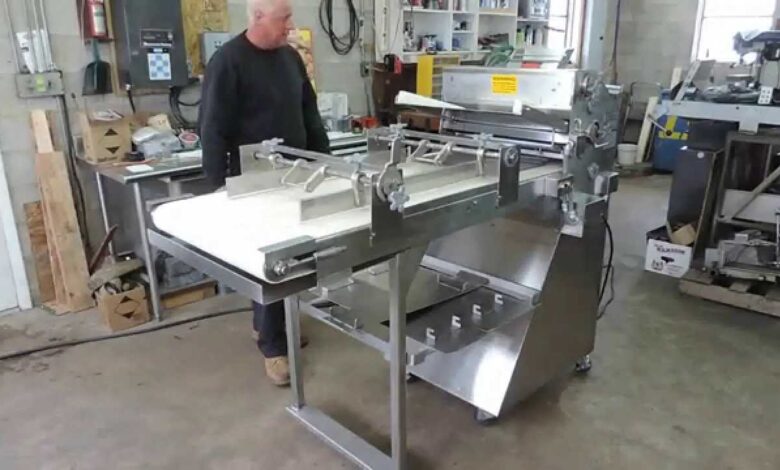
The bakery sector is characterized by a combination of inventiveness accuracy and productivity. The commercial dough sheeter is one of the most important instruments that bakeries need in order to achieve uniformity and efficiency in their operations. This specialized piece of equipment has completely changed the way that professional bakers work with dough. It has made it possible for them to achieve consistency in thickness and texture while also saving a substantial amount of time and effort. A dough sheeter is a game-changer for companies who want to increase their operations without sacrificing quality. It may be used for croissants pastries pizza dough or fondant among other things. This article covers all you need to know about commercial dough sheeters including its characteristics and advantages as well as the aspects you should take into consideration when selecting the dough sheeter that is most suited to meet your requirements.
What is a Commercial Dough Sheeter?
The term “commercial dough sheeter” refers to a machine that is specially built to roll and stretch dough to a certain thickness. The dough is pressed by two rollers that may be adjusted to different positions as it travels through the machine resulting in sheets that are consistent and can be used for a variety of baked items. This piece of equipment is very useful for bakeries pizza restaurants and other establishments that need the manufacture of dough in big numbers without compromising consistency.
There is a wide range of sizes and configurations available for dough sheeters including tabletop units for smaller businesses and bigger machines that stand on their own for high-volume manufacturing. Dough sheeters are an integral piece of equipment in the commercial baking sector due to their flexibility and efficiency.
Key Features of Commercial Dough Sheeters
Modern dough sheeters are equipped with features that enhance their functionality and user experience. Here are some of the most common features:
- Adjustable Rollers: These provide bakers with the ability to tailor the thickness of the dough to better match the needs of a particular recipe.
- Belt Conveyors: The majority of machines are equippe with conveyor belts that move the dough through the rollers in order to guarantee a smooth and consistently functioning operation.
- Reversible Operation: This function allows the dough to be processe back and forth through the rollers without the need for any operator intervention which saves both time and labor.
- The compact size of tabletop versions allows them to be incorporate into smaller places making them an excellent choice for kitchens that have a restricted amount of space.
- Heavy-Duty Construction: Commercial dough sheeters are constructe to endure regular usage in demanding situations. These dough sheeters are normally made from stainless steel or other materials that are long-lasting.
- Safety Mechanisms: In order to safeguard operators from being injure in the event of an accident modern machines often have safety guards and emergency stop buttons.
Benefits of Using a Commercial Dough Sheeter
Investing in a dough sheeter offers several advantages that can significantly impact the efficiency and output of a bakery or restaurant. Below are some key benefits:
- The consistency of the dough is essential for many recipes and it is important to have a consistent thickness. Dough sheeters provide consistent results each and every time which ultimately leads to an improvement in the product’s overall quality.
- It is possible to save time by rolling dough manually which is a labor-intensive and time-consuming process. A dough sheeter makes the process more efficient which frees up staff members to concentrate on other responsibilities.
- The automation of the dough preparation process allows companies to reduce the amount of human work that is require which ultimately results in cost savings throughout the course of the business’s lifetime.
- Dough sheeters are a flexible addition to any kitchen since they can be use for a broad variety of applications ranging from pizza bases and fondant to desserts such as croissants and puff pastries.
- Improved Workflow: Bakeries are able to expand their production capacity and more effectively satisfy the demands of their customers if they use a dough preparation method that is both quicker and more efficient.
Types of Commercial Dough Sheeters
There are several types of dough sheeters available each designe to cater to specific needs and production volumes. Understanding the different types can help you choose the right machine for your business:
- Manual dough sheeters are those that are operate by hand and are most suitable for enterprises that are on a smaller size or have restricted expenditures.
- Semi-Automatic Dough Sheeters: These machines combine manual operation with certain automated elements enabling a compromise between affordability and efficiency. They include a combination of manual and automated functionality.
- Automatic Dough Sheeters: Fully automated machines are great for high-volume manufacturing since they need less human interaction and bring about consistent outcomes. These machines are perfect for dough sheeting.
- Tabletop dough sheeters are suitable for use in kitchens that are on the smaller side or in enterprises that have limited space because of their portability and compact size.
- Dough Sheeters that are Floor-Standing: These machines are more sturdy and have the ability to handle bigger production capacity. They were designe for large-scale commercial operations.
Factors to Consider When Choosing a Dough Sheeter
Selecting the right dough sheeter for your business involves careful consideration of various factors. Here are some key aspects to keep in mind:
- The production volume involves determining the quantity of dough that has to be processed on a daily basis and selecting a machine that is capable of managing the task.
- Availability of Space: Take into account the dimensions of your kitchen and choose a dough sheeter that makes a comfortable fit without causing the workplace to become overcrowded.
- It is important to make sure that the machine is capable of handling the several sorts of dough that you operate with whether it be for pizza pastries or other baked products.
- Ease of operate: When looking for a machine look for one that has controls that are easy to understand and features that are user-friendly. This will decrease the amount of time that employees need to spend learning how to operate the machine.
- Maintenance Requirements: If you want to reduce downtime and guarantee that your product will last for a long time choose a model that is simple to clean and maintain.
- Budget: Determine your financial constraints and choose a dough sheeter that provides the most possible value for the money without sacrificing the quality of the product.
Maintenance Tips for Commercial Dough Sheeters
Proper maintenance is essential to keep your dough sheeter in optimal condition and prolong its lifespan. Here are some maintenance tips:
- Cleaning on a Regular Basis: It is important to clean the machine after each usage in order to avoid the accumulation of dough and flour residues.
- Perform Component Inspections: On a regular basis examine the rollers belts and other components to look for any indications of wear and tear.
- Lubricate Moving components: To maintain smooth operation and decrease friction use lubricant that is safe for food to the moving components within the machine.
- Observe the Guidelines Provided by the Manufacturer: Maintaining the product in accordance with the manufacturer’s instructions is the best way to prevent the warranty from being voide.
- To schedule professional maintenance please: By doing routine maintenance on a regular basis a qualified technician may assist in identifying and resolving possible concerns before they escalate into serious difficulties.
Applications of Commercial Dough Sheeters
Dough sheeters are use in a wide range of culinary applications making them indispensable for various businesses. Here are some examples:
- For the purpose of rolling out dough for baked goods such as cookies croissants and pastries.
- Pizzerias: For the purpose of easily creating pizza bases that are consistent.
- The confectioneries are use for rolling out marzipan and fondant which are use for decorating cakes.
- The preparation of huge amounts of dough for events and banquets are within the purview of catering services.
- Restaurants: For the purpose of producing uniform dough sheets for a variety of menu items available.
Conclusion
Instead of being just a piece of machinery a commercial dough sheeter is an investment in the efficiency uniformity and quality of the dough sheeting process. Through the automation of the dough preparation process these machines make it possible for enterprises to satisfy the needs of their customers while still maintaining excellent production standards. A dough sheeter may assist expedite workflows and improve the quality of baked items regardless of the size of the bakery you operate. This is true whether you manage a small bakery or a large-scale enterprise. It is possible for you to make an educate selection that will contribute to the expansion and success of your company if you have a thorough awareness of the characteristics advantages and factors that are involve in selecting the appropriate commercial equipment.


