Why Some Tree Branches Should Stay Exactly Where They Are
How to Know Which Tree Branches Need Pruning and Which Should Stay
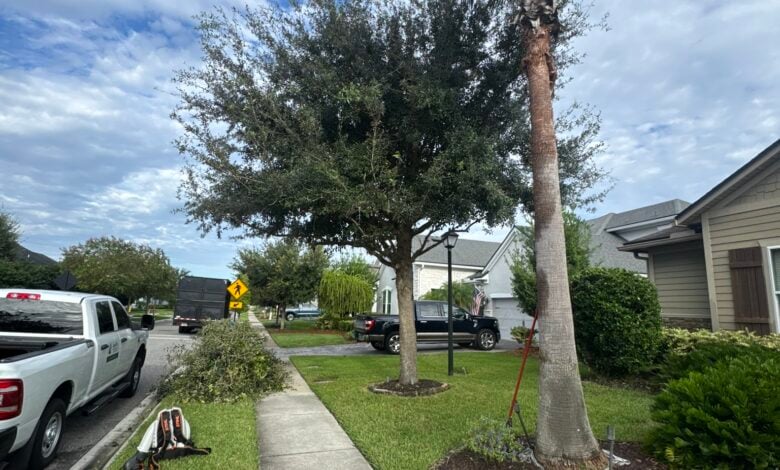
Tree pruning can look simple from the ground. We see a branch hanging low, growing sideways, or making the canopy look uneven, and it can be tempting to think, “That one needs to go.” But trees are not shaped like furniture. Every branch has a purpose, and removing the wrong one can create a new problem instead of solving an old one.
We have learned that good pruning starts with knowing what to leave alone. A healthy branch does not need to be cut simply because it looks different from the rest. Before making a cut, we need to understand how that branch fits into the tree.
Not Every Uneven Branch Is a Problem
Trees rarely grow in perfect shapes.
One side may be fuller than the other. A branch may stretch farther toward an open area. Another may grow at an unusual angle because it has been reaching for available sunlight.
That does not automatically mean the tree needs corrective work.
When we look at a tree, we first consider its overall structure. We look for branches that are dead, broken, damaged, rubbing against other limbs, or growing where they create a clear issue.
This helps us avoid unnecessary cutting.
The goal of pruning should be purposeful. Each cut should have a reason behind it.
A Tree Needs Its Smaller Branches Too
It is easy to focus on large limbs because they are more noticeable.
However, smaller branches and twigs also contribute to the tree’s overall structure. They help create the canopy and support new growth.
Removing too much material at once can change the tree more than expected.
That is why we do not believe that “more trimming” automatically means “better trimming.”
A tree does not need to look perfectly shaped to be well maintained.
In many cases, natural growth is exactly what we want to preserve.
Look for Branches That Are Rubbing
One thing worth watching is branches that repeatedly rub against each other.
As branches move in the wind, constant rubbing can damage their outer surfaces. Over time, that can create weak areas.
This does not mean every crossing branch needs immediate removal. The position, size, and movement of the branches all matter.
We look at how the branches interact rather than making a decision based only on appearance.
A small adjustment can sometimes be more appropriate than removing a major limb.
Dead Branches Deserve a Closer Look
Dead branches are different from healthy branches that simply grow in an unusual direction.
A dead limb may become brittle over time. Larger dead branches can also fall during strong winds or storms.
When we inspect a tree, we pay attention to branches that have no signs of active growth, especially when they are large or positioned over areas people regularly use.
However, identifying dead wood from the ground is not always easy.
Some branches can appear lifeless because of seasonal changes, while others may have damage that is difficult to see without a closer assessment.
That is why guessing is not always the best approach.
Pruning Is About Structure, Not Just Appearance
Homeowners sometimes think of pruning as a way to make a tree look neat.
Appearance can certainly be part of the conversation, but structure matters more.
We want to understand how major branches connect to the trunk and to each other. We also consider whether branches are competing for space or creating unnecessary weight in one area.
A good pruning plan should work with the natural form of the tree.
Trying to force a tree into a perfectly symmetrical shape can lead to unnecessary cuts.
Nature does not work that way.
What About Branches Near Buildings?
Location changes the situation.
A branch growing toward an open lawn may not create the same concern as one growing toward a roof, driveway, fence, or walkway.
The surrounding property should therefore be considered before pruning begins.
We look at clearance and the direction of growth. We also consider how the tree may continue growing after the work is finished.
Removing a branch may solve today’s clearance issue, but if the underlying growth pattern remains unchanged, another branch may eventually grow into the same space.
Thinking ahead matters.
Pruning Should Not Become a Routine Cutting Session
One mistake we try to avoid is approaching a tree with a fixed number of branches that “need” to be removed.
Every tree is different.
Species, age, structure, location, previous pruning, and current condition can all change the right approach.
That is why pruning services St Augustine should be based on the individual tree rather than a standard cutting pattern.
A tree that needs a few carefully selected cuts should not be treated like a tree that requires major structural work.
The amount of pruning should match the actual need.
Previous Cuts Can Tell a Story
Old pruning cuts can give us useful information.
Large cuts may show that a tree has been heavily pruned in the past. Multiple cuts in the same area can also tell us how the tree responded to earlier work.
Sometimes a tree has developed new branches around an old cut. Those branches may grow differently from the original limb.
This is why we do not look only at today’s appearance.
The tree’s history can help explain its current structure.
Young Growth Can Change Quickly
Trees are living systems, and their shape changes over time.
A branch that looks harmless today may become a clearance issue later. A young tree may also develop competing leaders or crowded growth as it matures.
Regular observation can help homeowners notice those changes early.
That does not mean every young branch should be removed.
Instead, it means paying attention to the direction of growth and the tree’s developing structure.
Small, thoughtful corrections can sometimes be preferable to major cuts later.
When a Tree Has Been Heavily Pruned Before
Previous work can affect what should happen next.
If a tree has already lost a large amount of canopy, removing more material without a clear reason may not be appropriate.
We also need to consider whether the tree has produced dense new growth after earlier cutting.
This is where a careful look becomes important.
Rather than starting with the question, “What can we cut?” we prefer to ask, “What actually needs attention?”
That small change in thinking can lead to better decisions.
Pruning After Storm Damage
Storms can leave trees with broken limbs, hanging branches, or newly exposed areas of damage.
In these situations, pruning may be part of the cleanup process. But storm-damaged trees should be approached carefully.
A branch that appears ready to fall may still be under tension. Large limbs can also shift unexpectedly when weight is removed.
For that reason, homeowners should avoid climbing damaged trees or attempting complicated cuts themselves.
After a serious storm, it is better to assess the tree first and determine which branches actually need attention.
Why Location Matters When Planning Pruning
The same type of branch can have very different importance depending on where the tree stands.
A low branch in an open yard may not matter much.
That same branch beside a driveway could interfere with vehicles. Near a walkway, it could affect clearance. Close to a structure, it may require a different approach.
For homeowners considering pruning services Saint Johns FL, looking at the tree together with its surroundings is an important part of planning the work.
The property helps determine what needs attention.
A Simple Way to Think About Pruning
We like to keep the decision-making process straightforward.
First, look at the tree’s overall shape.
Then, identify dead, damaged, rubbing, or poorly positioned branches.
Next, consider the tree’s surroundings.
After that, think about how the tree is likely to grow following the work.
Finally, decide whether a cut is genuinely necessary.
This process helps prevent the common habit of removing branches simply because they look inconvenient.
The Best Pruning May Be Less Than You Expect
Sometimes the most responsible pruning job is not the one that removes the most branches.
It is the one that removes only what needs to be removed.
A tree can have an uneven canopy and still be perfectly natural. It can have a branch growing at an angle without that branch automatically being a problem.
We believe thoughtful pruning means knowing when to cut and, just as importantly, when to leave a healthy branch alone.
Trees change over time. Their needs change too.
That is why regular observation is more useful than treating every pruning project as a one-time fix.
Final Thoughts
Pruning is not simply about cutting branches until a tree looks tidy.
It is about understanding how the tree grows, how its branches are connected, and how the surrounding property affects the situation.
At Quill’s Tree Services, LLC, we approach tree care by looking at the actual condition of the tree rather than relying on a one-size-fits-all cutting pattern.
For homeowners, the key lesson is simple: before removing a branch, understand why it is there and what could happen after it is gone.
A thoughtful cut can improve a tree’s structure. An unnecessary cut can create another problem. Knowing the difference is what makes pruning a careful process rather than just another yard task.