Araucaria Plant and Kaner Plant: Two Very Different Garden Favourites
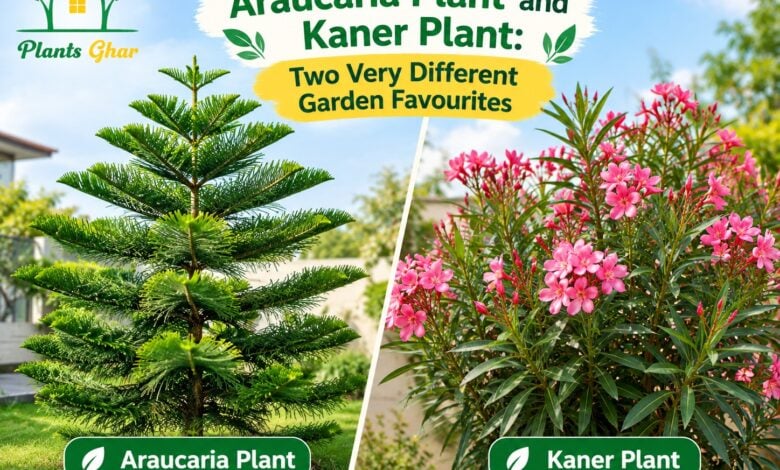
Walk through any nursery in Lahore, Karachi or Islamabad and you will spot two plants again and again: a neat, symmetrical evergreen that looks like a miniature Christmas tree, and a hardy flowering shrub lining roads and boundary walls. The first is the araucaria plant, the second is the kaner plant. They could not be more different in temperament, yet both earn their place in a garden. Here is what you need to know before bringing either one home.
Araucaria Plant: The Tidy Evergreen
The araucaria plant, most often sold as Araucaria heterophylla, is better known as the Norfolk Island pine. Despite the name it is not a true pine, but its tiered branches and soft, feathery needles give it a formal, almost sculpted look. In the wild it grows into a giant tree, yet in pots it stays slow and manageable, usually reaching one to two metres indoors. That makes it a favourite for balconies, entrances, offices and living rooms.
Light and location. An araucaria plant wants bright, indirect light. A spot near an east or south-facing window works well. Outdoors, give it morning sun and shade from the harsh afternoon heat of a Pakistani summer, which can scorch the needle tips. Turn the pot a quarter turn every week or two, otherwise the plant leans toward the light and grows lopsided.
Water and soil. Use a light, well-draining potting mix and let the top few centimetres dry out before watering again. Soggy roots are the fastest way to lose this plant. On the other hand, letting it dry out completely causes the lower branches to turn brown and drop, and those branches do not grow back. Aim for steady, moderate moisture.
Humidity and feeding. Dry air, especially from air conditioners, is a common problem. Group it with other plants, mist lightly, or keep a tray of wet pebbles nearby. Feed with a balanced liquid fertiliser once a month in spring and summer, and skip feeding in winter.
One rule not to break. Never cut the central leader, the topmost growing tip. Once it is gone, the plant will not form that neat pyramid again. Trim only dead or damaged lower branches.
Kaner Plant: The Tough Flowering Shrub
If the araucaria is the polite guest, the kaner plant is the neighbour who thrives no matter what. Known in English as oleander (Nerium oleander), kaner is an evergreen shrub that usually grows between two and five metres tall. Its narrow, leathery leaves stay green all year, and from spring right through autumn it produces clusters of pink, white, red or apricot flowers. The name is also used for the yellow kaner (Cascabela thevetia), a related but different plant with bright yellow, bell-shaped blooms.
Why gardeners love it. The kaner plant handles heat, drought, poor soil and even salty air without complaint. That is why it is planted along highways, in school grounds and around boundary walls across South Asia. It also works well as a privacy hedge or windbreak, and it is one of the few flowering shrubs that keeps blooming through the peak of summer.
Growing kaner. Plant it in full sun, ideally six or more hours a day. Almost any well-drained soil will do. Water regularly for the first few months until the roots settle, then cut back, because established plants need very little. Prune lightly after a flowering flush to keep the shape compact and encourage new growth. Cuttings root easily, so propagation is simple and cheap.
A serious safety note. Every part of the kaner plant is poisonous, including the leaves, flowers, sap and seeds. Wear gloves when pruning, wash your hands afterwards, and never burn the trimmings. Keep it away from play areas, and be careful if you have children or pets that chew on plants. This is not a reason to avoid it, only a reason to place it thoughtfully.
Choosing Between the Two
The choice usually comes down to what you need. If you want a controlled, elegant accent for a pot, entrance or indoor corner, the araucaria plant is the better fit. If you need a low-maintenance, colourful shrub for a sunny boundary, roadside or large lawn, the kaner plant does the job with far less effort. Many landscapes use both: araucaria near the house for structure, and kaner further out for colour and screening.
Frequently Asked Questions
1. Can an araucaria plant be kept indoors?
Yes. It does well indoors as long as it gets bright, indirect light and is not placed right in front of an air conditioner or heater.
2. Why are the branches of my araucaria plant turning brown?
The usual causes are underwatering, dry air or too much direct afternoon sun. Brown lower branches will not recover, so fix the conditions early to protect the rest of the plant.
3. How fast does an araucaria plant grow?
Slowly. In pots it often adds only around 15 cm a year, which is why it stays a manageable size for so long.
4. Is the kaner plant poisonous?
Yes, all parts are toxic if eaten, and the sap can irritate skin. Use gloves, keep children and pets away, and never burn cuttings.
5. How often should I water a kaner plant?
Water new plants regularly for the first few months. Once established, a deep watering every week or two in summer is enough, and even less in winter. Potted plants need water more often than those in the ground.
6. When does the kaner plant flower?
It blooms from spring through autumn, with the heaviest flowering in the warmer months.
7. Can I grow kaner in a pot?
Yes, in a large pot with drainage holes, placed in full sun. Expect to prune it a little more often to keep the size under control.