Flat-Pack Rigid Boxes: How to Choose the Right Structure
Flat pack rigid boxes, Rigid gift boxes,
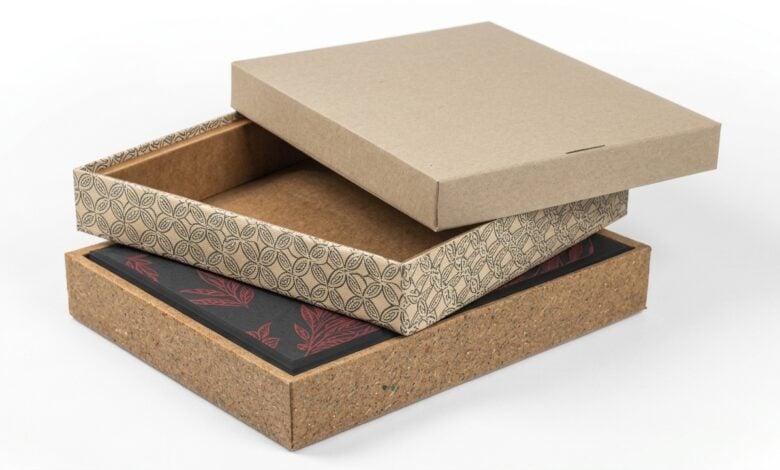
Premium packaging usually takes up space. A traditional rigid box arrives fully formed, which looks excellent on a shelf but fills a warehouse quickly. Folding cartons ship flat, but they rarely feel as substantial in the hand. Flat-pack rigid boxes try to sit between the two.
Flat pack rigid boxes are rigid-board boxes designed to fold or collapse for transport and storage, then be formed into their finished shape before packing. They are also called collapsible or foldable rigid boxes, although the exact construction varies by design. This guide explains how they work, how they compare with the alternatives, when they fit, when they do not, and what to settle before you order.
What Are Flat-Pack Rigid Boxes?
A rigid box, also called a set-up box, is built from a thick board covered with a printed paper wrap. The Paperboard Packaging Council (PPC) notes that rigid boxes generally do not fold flat, while folding cartons do. A flat-pack rigid box changes one part of that picture: it keeps the rigid-board build but is designed to travel and be stored in a collapsed state.
How the Structure Works
The details differ between manufacturers, but most designs follow the same basic sequence:
- The box is delivered flat or partly collapsed.
- The panels are unfolded by hand.
- The structure is secured, for example with tabs, folded walls or a closure system, so it holds its shape.
- An insert is added if the design includes one.
- The product is packed and the box is closed.
Closures such as magnetic flaps are common on rigid packaging, but they are a design choice rather than a requirement. Some structures arrive almost flat. Others keep one section partly formed. Always confirm how a specific design arrives before you plan storage around it.
Flat-Pack vs. Traditional Rigid Boxes
The finished box can look and feel similar. What changes is everything before the product goes in:
- Delivery: a traditional box arrives formed. A flat-pack box arrives collapsed.
- Storage: empty flat-pack boxes generally take up less room than formed ones. The saving depends on box size, quantity and construction.
- Labor: a traditional box can usually be filled straight away. A flat-pack box needs forming first.
- Structure: a formed-in-factory box has no hinges or folds that must be reset. A flat-pack box depends on its folds and locking method working repeatedly.
Why Brands Consider Flat-Pack Rigid Boxes
Interest in flat pack rigid boxes usually starts with a practical problem rather than a design preference. Four situations come up most often.
Storage and Inbound Logistics
Formed rigid boxes are mostly air. If empty packaging crowds your warehouse or an outsourced fulfillment space, a collapsed format may free up room. Treat any savings figure with caution, because the result depends on dimensions, quantity and how the boxes are palletized.
Premium Presentation
Brands often choose rigid packaging because the thick board and printed wrap signal quality. A flat-pack build can preserve much of that feel, provided the finished walls are sturdy and the folds are clean.
Fulfillment Flexibility
Teams can store boxes flat and form them as orders come in, or form a batch ahead of a busy period. This works best when someone has time to assemble, which is covered in the limitations below.
Product and Gifting Experience
The opening experience matters for gifts, subscription kits and launch products. Lid style, inserts and closure all shape that moment, and a flat-pack design can support the same options in many cases.
Flat-Pack Rigid vs. Traditional Rigid vs. Folding Cartons
Folding cartons and rigid boxes are different product families. According to PPC, folding cartons use lighter board, fold flat for shipping and storage, and generally cost less per unit with faster production. Rigid boxes use much thicker board and are described as stronger and more durable. Flat-pack rigid boxes borrow from both. The table below is qualitative, because real differences depend on the specific design.
| Factor | Traditional rigid | Flat-pack rigid | Folding carton |
| Empty storage | Takes the most space | Takes less space | Takes little space |
| Arrives flat | No | Yes, or partly | Yes |
| Assembly | Usually none | Forming required | Forming required |
| Structural feel | High | High, varies by build | Lower than rigid |
| Presentation | Premium | Premium, design-dependent | More retail-oriented |
| Inserts | Well suited | Possible, design-dependent | Depends on structure |
| Typical fit | Maximum presentation | Premium look with storage limits | Efficient, higher-volume retail |
When Traditional Rigid Boxes Make More Sense
Choose a formed rigid box when presentation is the top priority, your team packs in small numbers, or the product needs a fixed, fully stable shape. Storage space is the main cost you accept.
When Folding Cartons Make More Sense
Folding cartons suit higher volumes, tighter budgets and fast packing lines. They are not a weaker choice. For many retail products, they are simply the better-matched one.
When Flat-Pack Rigid Boxes Fill the Middle Ground
Rigid gift boxes make sense when you want a rigid-board experience but cannot store or ship formed boxes comfortably, and your team can handle a short forming step.
When Are Flat-Pack Rigid Boxes a Good Fit?
The examples below are common matches, not guarantees. Test each against your own product.
Premium Gifting
Gift sets reward a strong opening moment. If volumes rise sharply at certain times of year, collapsed storage can also help.
Ecommerce and Subscription Packaging
Recurring shipments need packaging that is predictable and quick to prepare. Flat-pack structures can work when forming is simple and consistent. The box usually still needs an outer shipping carton, so plan that layer too.
Apparel and Accessories
Lightweight, relatively shallow products often pair well with collapsible structures, since they place little load on the folds.
Seasonal or Campaign Packaging
Limited runs create storage pressure for a short period. Flat delivery lets you hold stock without giving up shelf or floor space for months.
Brands With Limited Storage Capacity
Small teams and shared warehouses often feel the cost of empty formed boxes first. Brands comparing foldable rigid packaging can review construction options, closures and insert styles before deciding which structure suits their product and packing workflow.
In short, choose a flat-pack rigid structure when:
- premium presentation matters to the product experience,
- storage or inbound volume is a real constraint,
- your team can assemble boxes without slowing fulfillment,
- the product fits the structure with proper clearance, and
- the box will be shipped inside suitable outer packaging.
When Flat-Pack Rigid Boxes May Not Be the Best Choice
Flat-pack is not automatically better. It can be the wrong call in these situations:
- High-speed packing lines. Every box needs forming, and that time adds up at volume.
- Heavy or fixed-geometry products. Items that stress the walls or folds may suit a formed rigid box better.
- Very small boxes. If a formed box is already compact, collapsing it may save little.
- No assembly capacity. If no one has time to form boxes, the storage advantage disappears.
- Unusual inserts or closures. Complex internal parts can reduce how flat the box can fold. Ask the supplier what is possible.
What Should You Specify Before Ordering?
A clear specification prevents most sampling delays. Prepare these details before you ask for a quote:
- Product dimensions and weight.
- Required clearance around the product.
- Internal and external box dimensions.
- Board thickness and structure.
- Opening style, such as lift-off lid, hinged lid or drawer.
- Closure type.
- Insert material and shape.
- Print, wrap and finish.
- Order quantity.
- Packed (flat) dimensions per carton or pallet.
- Who assembles the box, and how.
- Outer shipping carton requirements.
- Sample requirements before production.
Then answer these seven questions:
- Does presentation materially change the product experience?
- Is inbound storage space a concern?
- Can your team assemble boxes?
- Does the product need an insert?
- Will the box ship inside another protective package?
- Does the box need a particular opening experience?
- Can you test the structure with the real product?
If several answers point to premium presentation plus flat storage, a flat-pack rigid structure is worth sampling. If they point to speed and volume, look at folding cartons. If they point to maximum presentation with ample space, a formed rigid box may be the simpler choice.
Conclusion
The right box is not the most premium one. It is the structure that balances protection, presentation, storage, assembly and customer experience for your product. Flat-pack rigid boxes can bridge premium rigid packaging and flat-delivery efficiency, but only when the product and workflow fit.
Before you commit to production, request a structural sample and test it with your actual product, insert, closure and packing process.
Frequently Asked Questions
Are flat-pack rigid boxes the same as collapsible rigid boxes?
Usually, yes, although terminology varies. Manufacturers also use “foldable” and “folding” for similar structures, so ask for a description of the construction rather than relying on the name.
Do flat-pack rigid boxes arrive completely flat?
Not always. Some arrive fully flat, while others are partly collapsed or keep one section formed. Confirm the packed dimensions before planning storage.
Are flat-pack rigid boxes the same as folding cartons?
No. Folding cartons use lighter paperboard, while flat-pack rigid boxes keep a thicker rigid-board build.
Do flat-pack rigid boxes require assembly?
Generally, yes. They need to be formed before packing. The method and time depend on the structure, so time it during sampling.
How should I test a flat-pack rigid box?
Test it with the real product, the insert and the closure. Form and fill several boxes to check how long assembly takes, then ship a packed sample inside its outer carton to see how it holds up.