
What Engineers Consider When Designing Modern Substations
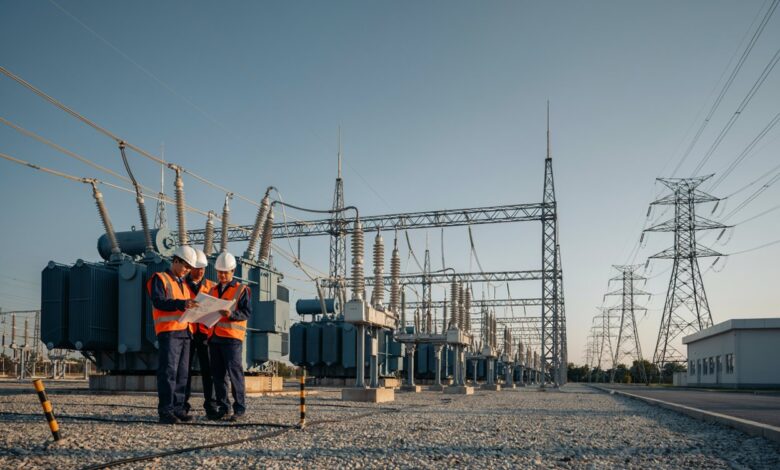
Modern electrical substations are more than collections of transformers, breakers, and busbars. They are carefully engineered facilities that connect generation, transmission, and distribution networks while maintaining safety, reliability, flexibility, and efficient operation. As power systems become more complex and renewable generation continues to grow, substation design requires a coordinated approach across electrical, civil, structural, protection, control, and communication disciplines.
For engineering teams, successful substation development starts long before equipment is installed. Engineers must understand the electrical requirements, site conditions, applicable standards, operational objectives, and future expansion needs. This article explores the major factors considered during modern substation development.
1. Understanding Electrical System Requirements
The first step in any substation project is understanding how the facility will interact with the surrounding power system. Engineers evaluate voltage levels, load requirements, available fault current, generation characteristics, transformer capacity, and expected power flows.
Power system studies can help determine whether the proposed configuration will operate safely under normal and contingency conditions. Load flow analysis, short-circuit studies, transient and dynamic assessments, and protection coordination studies may all contribute to the design process.
These studies influence important decisions such as transformer ratings, bus configurations, breaker interrupting ratings, conductor sizes, and protection settings. A well-developed substation design engineering process therefore begins with system-level analysis rather than equipment selection alone.
2. Selecting the Right Substation Configuration
Substation configuration directly affects reliability, maintenance requirements, operating flexibility, and project cost. Engineers may evaluate arrangements such as single bus, sectionalized bus, main-and-transfer bus, ring bus, breaker-and-a-half, or double-bus configurations depending on project requirements.
The appropriate arrangement depends on factors such as voltage class, reliability criteria, number of circuits, available space, maintenance philosophy, and consequences of equipment failure.
For example, a transmission facility serving critical network connections may require greater redundancy than a smaller distribution installation. Engineers must balance operational requirements with physical complexity and lifecycle considerations.
Modern high-voltage substation design also requires careful consideration of insulation coordination, clearances, switching requirements, grounding, lightning protection, and equipment ratings.
3. Safety, Grounding, and High-Voltage Clearances
Personnel and equipment safety are fundamental to substation engineering. High-voltage facilities must be designed with appropriate electrical clearances, grounding systems, barriers, access controls, and equipment spacing.
A grounding system is particularly important because it provides a controlled path for fault current and helps limit dangerous touch and step voltages. Engineers analyze soil resistivity, fault current magnitude, grid geometry, conductor sizing, and ground potential rise when developing the grounding system.
Lightning protection and surge protection are also considered to reduce the risk of damage caused by atmospheric and switching transients.
Safety considerations extend beyond electrical systems. Engineers also address fire protection, emergency access, equipment separation, oil containment for transformers, fencing, lighting, and safe maintenance areas.
4. Equipment Selection and Protection Systems
Choosing substation equipment involves more than comparing nameplate ratings. Engineers must consider system conditions, environmental factors, reliability requirements, maintenance practices, and future operating scenarios.
Typical equipment includes power transformers, circuit breakers, disconnect switches, current transformers, voltage transformers, surge arresters, bus conductors, capacitor banks, reactors, and auxiliary systems.
Protection and control systems are equally important. Protective relays must detect abnormal conditions quickly and isolate faults while minimizing unnecessary outages. Coordination studies help ensure that protection devices operate selectively across the electrical network.
Modern substations increasingly incorporate numerical relays, digital communications, automated controls, condition monitoring, and intelligent electronic devices. These technologies can improve operational visibility and support faster fault identification and maintenance decisions.
5. Site Layout, Civil Works, and Project Planning
A technically sound electrical design must also work physically on the selected site. Site constraints can significantly affect the overall project.
Engineers evaluate topography, soil conditions, drainage, access roads, environmental conditions, available land, flood risk, and proximity to transmission or distribution corridors. These factors influence foundations, equipment placement, cable routing, stormwater systems, control buildings, and structural requirements.
This is where effective substation project planning becomes essential. Engineering teams coordinate electrical layouts with civil and structural designs so that equipment clearances, foundations, cable trenches, roads, and maintenance access are properly integrated.
For large projects, planning also includes procurement schedules, construction sequencing, outage coordination, permitting, quality control, and commissioning requirements. Addressing these considerations early can reduce redesign and construction delays.
6. Automation, Reliability, and Future Expansion
Modern substations are increasingly designed as connected and intelligent facilities. Automation systems can provide operators with real-time information about equipment status, alarms, measurements, and system conditions.
Supervisory control and data acquisition (SCADA), substation automation systems, digital protection, remote monitoring, and communications networks can support more efficient operation. Engineers must consider communication architecture, cybersecurity, redundancy, data availability, and interoperability when integrating these technologies.
Future expansion is another major consideration. A substation that meets today’s requirements may need additional transformers, feeders, transmission lines, or reactive power equipment later. Engineers can reserve physical space, establish expandable bus arrangements, and design foundations or cable routes with future modifications in mind.
Planning for expansion during the initial design stage can be significantly more practical than rebuilding a constrained facility later.
Building Substations for Long-Term Performance
Modern substation engineering requires a multidisciplinary approach that connects electrical analysis with safety, equipment selection, civil design, automation, construction, and long-term operational needs. Engineers must consider not only how a substation will perform under normal conditions, but also how it will respond to faults, maintenance activities, changing loads, and future network development.
From system studies and equipment ratings to grounding, protection, site layout, and automation, every design decision contributes to the facility’s overall reliability. Careful engineering and structured project planning help create substations that can support evolving power networks while maintaining safe and dependable operation.
For organizations developing new electrical infrastructure, working with experienced engineers throughout the design and planning process can help ensure that technical requirements, regulatory considerations, constructability, and future needs are addressed from the beginning.


