
Democratic Republic of The Congo Visa Photo Requirements

If you’re dreaming of stepping foot into the wild jungles, vibrant cities, and rich cultural tapestry of central Africa — then you’ll likely come across the phrase Democratic Republic of The Congo Visa Photo Requirements as one of the first hurdles you must clear. Getting the photo right isn’t just a small formality: it’s a crucial step that can decide whether your application sails through or comes back flagged. In this guide, we’ll dig into how to prepare the perfect visa photo and everything else you need to know about applying for a DRC e-visa. By the end, you’ll feel confident — and totally ready — to start your Africa adventure.
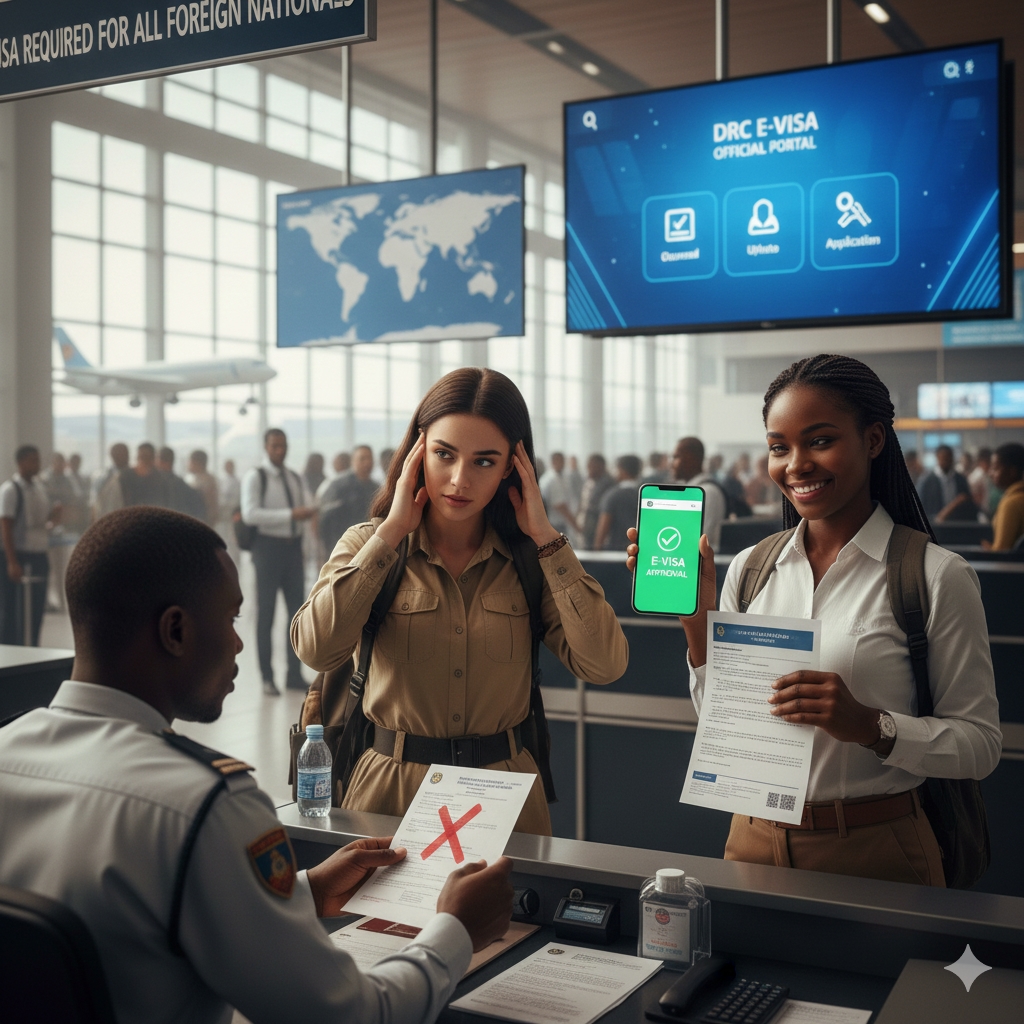
Why do I need an e-visa to visit the DRC?
Traveling to the Democratic Republic of the Congo (DRC) is unlike hopping between many European or Asian countries. Because of the special entry rules and security requirements, almost all foreign visitors — unless they come from visa-free nations — need to get an e-visa or visa in advance before arrival.
An e-visa simplifies the process: you apply online, submit your documents (passport, photos, application letter, etc.), wait for approval, and fly with your pre-approved visa paperwork. Once you land, border authorities will verify your documents. This process helps the DRC authorities manage entries while giving travelers a chance to organise everything in advance.
Using this e-visa process ensures you don’t have to scramble at the airport, and gives you enough time to prepare properly — especially photo and document requirements, which are strict.
How can I apply for a Democratic Republic of The Congo visa online?
Thinking of visiting the DRC? Discover exactly how to apply for a Democratic Republic of The Congo visa online — step by step.
-
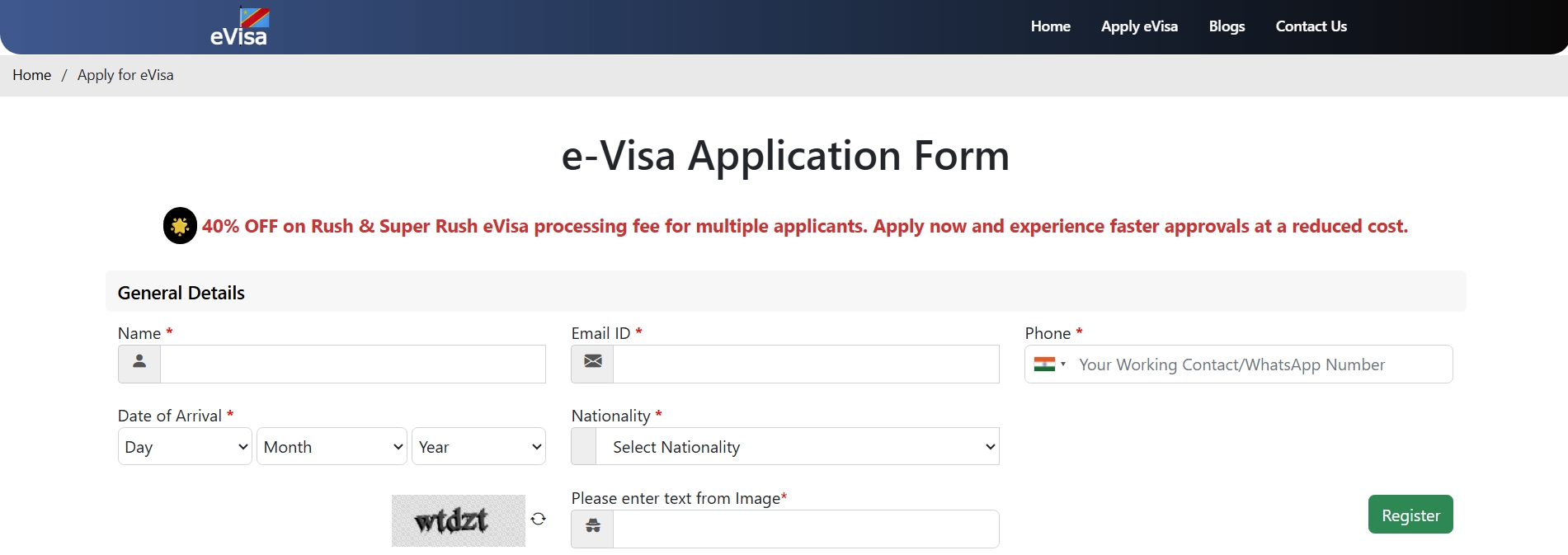
Fill out the application form: Enter all your details exactly as they appear on your passport — name, date of birth, nationality, passport number, arrival date, purpose of visit, etc.
-
Upload required documents: need to upload a copy of your passport bio page, a recent passport‑style photo, and any other required documents (for example, flight ticket, accommodation proof or invitation letter, depending on purpose of visit).
-
Select processing speed (if applicable): applications allow you to choose standard or expedited processing depending on how soon you plan to travel.
-
Pay the application fee: this stage, complete the fee for Congo visa application using the accepted payment methods (e.g. card). Payment is required to proceed.
-
Submit the application: Review all entered information carefully for accuracy, then submit. Make sure you keep a record of your application reference number or confirmation.
-
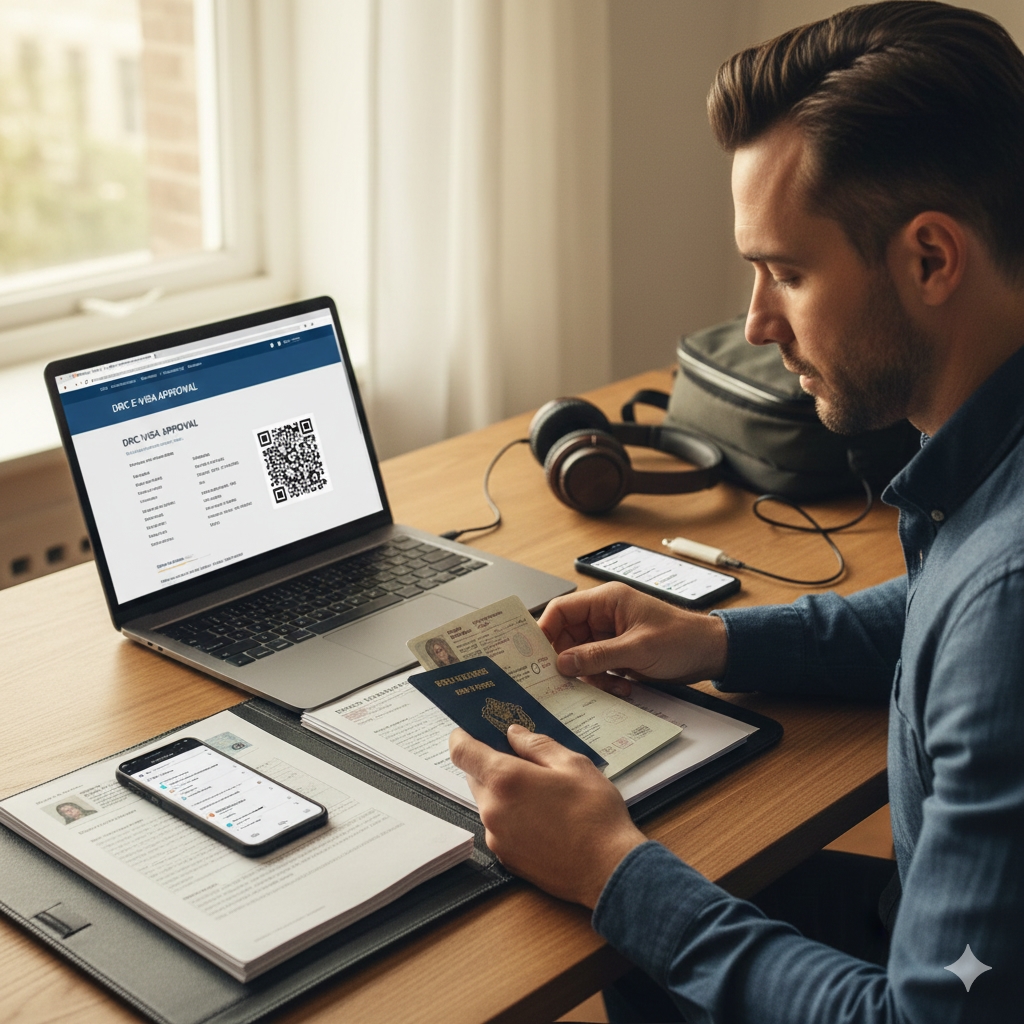
Await confirmation / e‑Visa approval: After review and processing, you should receive your e‑Visa approval (if everything is in order). You can then prepare for travel accordingly
What Are the Democratic Republic of The Congo eVisa Photo Requirements?
Getting your photo right is more than just showing a friendly face — it’s about meeting exact standards so your identity can be verified clearly. Here’s what you must ensure for your application photo:
-
The photo must be in colour, not black-and-white.
-
Background must be plain — white or a very light color — with no patterns, shadows or distracting elements.
-
Your full face and shoulders must be visible. The photo must show a clear frontal view, with your head centered and squared to the camera.
-
Facial expression should be neutral — no big smiles, mouth closed, eyes open, and looking straight ahead.
-
Your eyes and ears should be visible (i.e. hair or accessories shouldn’t obscure them).
-
Glasses are allowed only if they don’t hide or shade the eyes.
-
The photo must be recent — usually taken within the last 6 months.
These guidelines help make sure that the submitted photo represents what you actually look like now, and allows to easily match your face with the passport data.
What Size Photo Is Required for a DRC Visa Application?
One of the most confusing parts of preparing a visa application is getting the right photo size. For the DRC, the following is generally accepted:
-
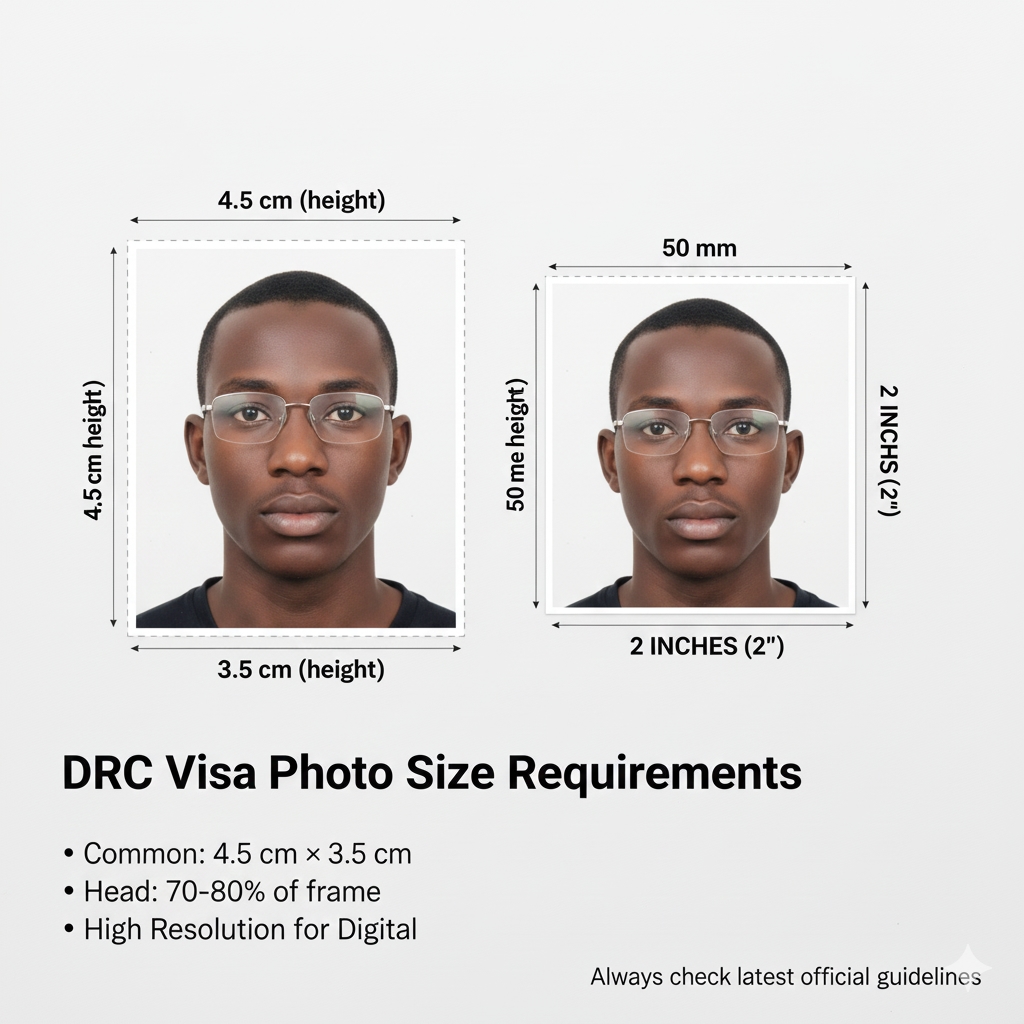
A common specification suggests a standard passport-style photograph size of 4.5 cm (height) × 3.5 cm (width).
-
Another source mentions 2 inches × 2 inches (about 50 mm × 50 mm) — especially in cases where square-format photos are accepted for digital submission.
-
The head (from chin to top of hair) should occupy roughly 70–80% of the photo frame.
-
For digital submissions, ensure good clarity and resolution (e.g. high enough DPI/resolution so the picture is sharp).
Because there are slight variations depending on the type of visa (paper-based or e-visa), it’s wise to check latest instructions before you take or upload your photo.
What is the validity period of a DRC eVisa?
When you apply for a typical short-term “ordinary flying visa” type for the DRC:
-
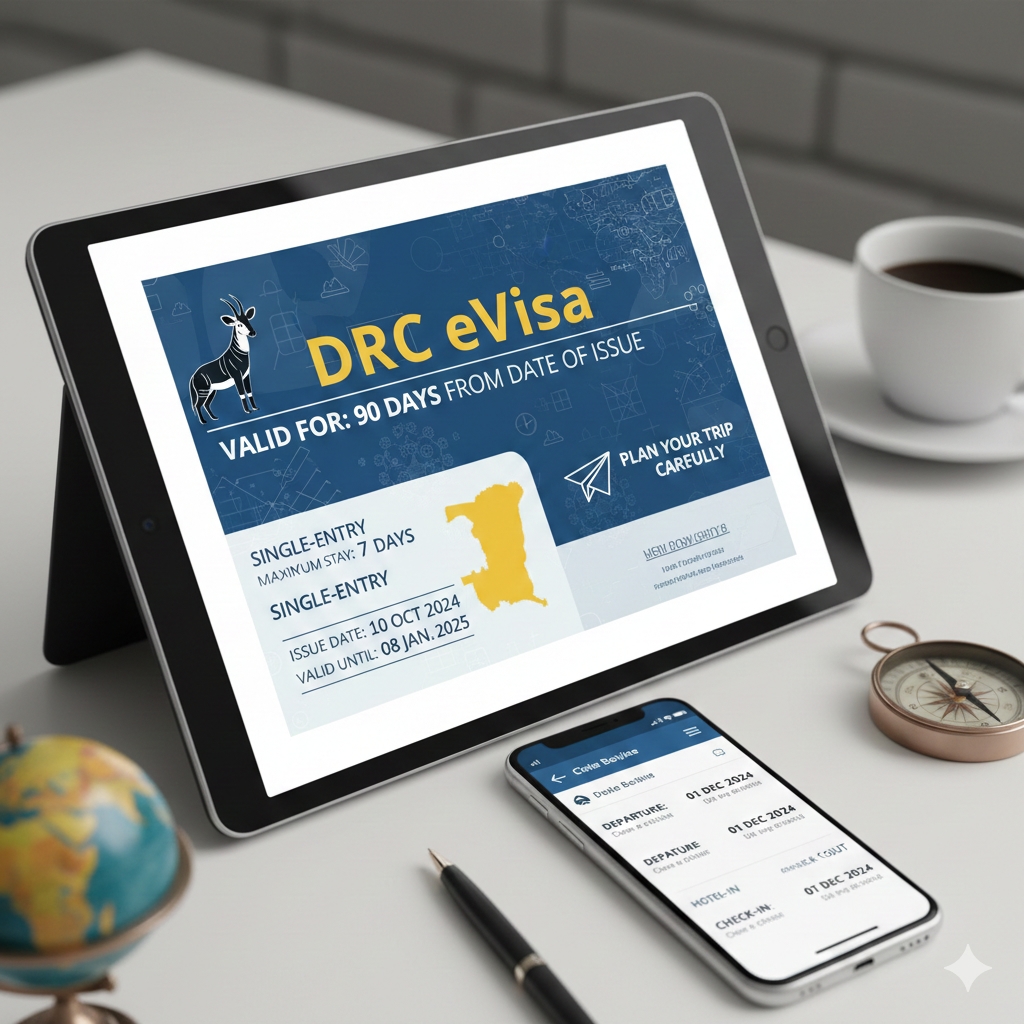
The visa validity is 90 days — meaning from the date it becomes valid, you have up to 90 days to enter the DRC. (As per data provided.)
-
The allowed stay duration on arrival will typically be 7 days (for a short tourist/trip visa), with single-entry access.
So plan carefully: flight bookings, accommodation — all should align so you enter within the visa validity and complete your activities within the permitted stay duration.
What Is the Expected Processing Time When You Apply for a Congo Visa?
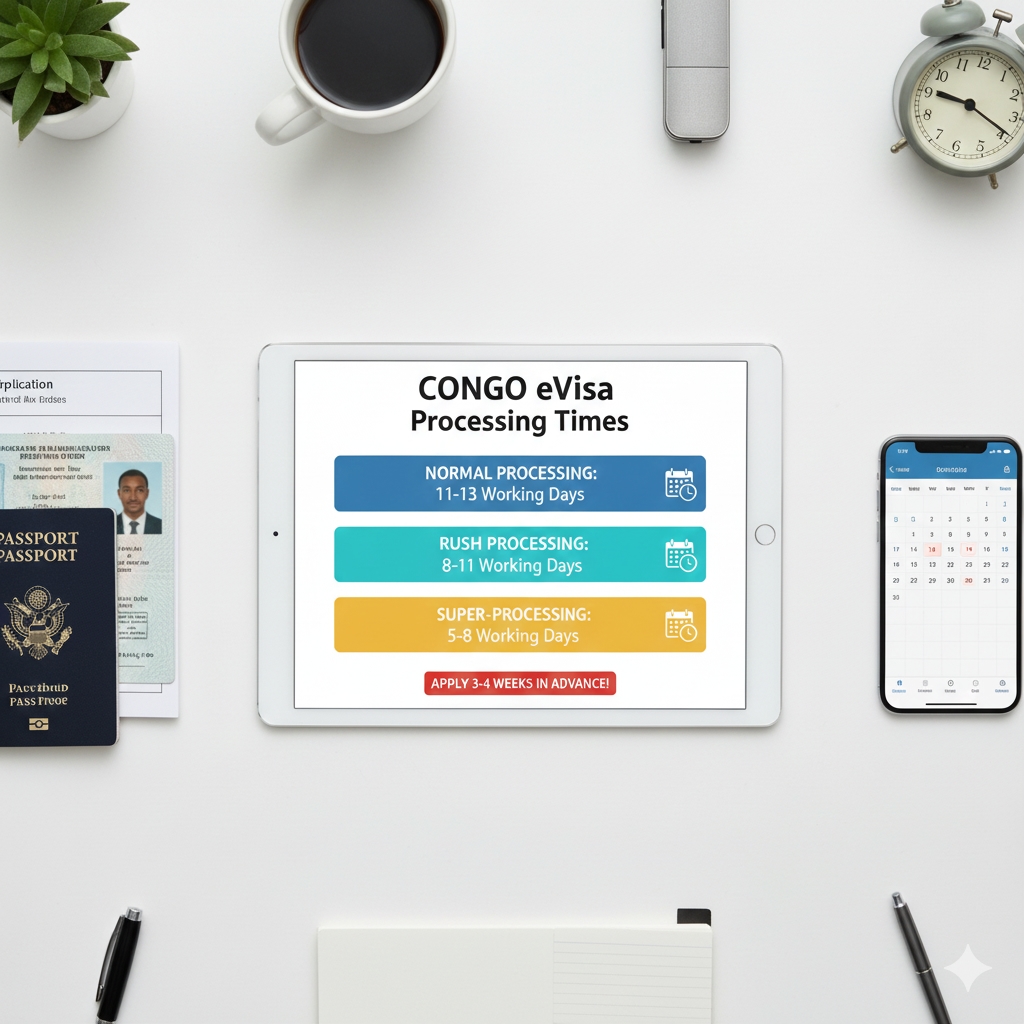
Depending on how quickly you want your visa, there are typically three processing options (as per guidelines for many visa services):
-
Normal Processing: Takes around 11–13 working days
-
Rush Processing: Shorter window — about 8–11 working days
-
Super-Rush Processing: Fastest turnaround — 5–8 working days
These processing times start counting from submission of the complete application (passport bio page, applicant’s photo, application letter, etc.).
Given these timeframes, it’s best to apply well in advance of your planned departure date — ideally at least 3–4 weeks ahead, to avoid stress or delays.
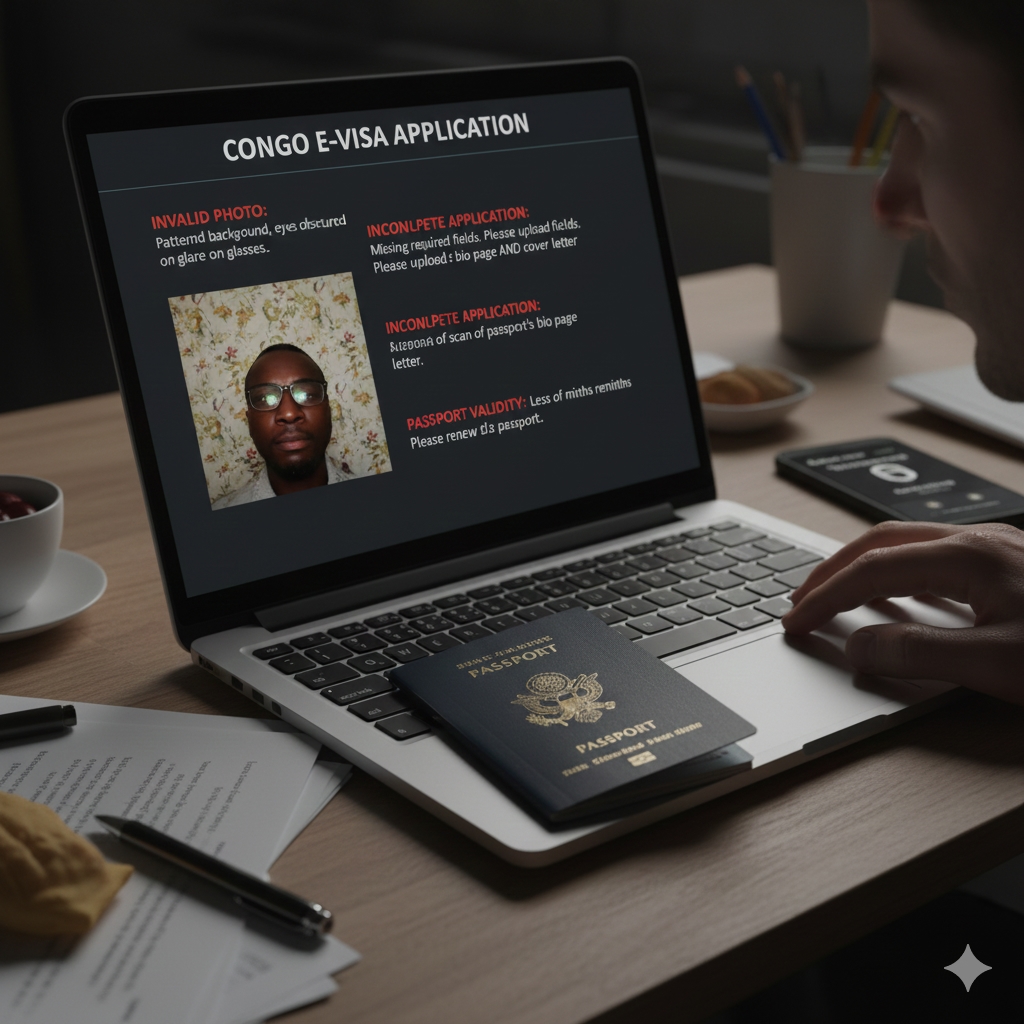
Why Can Congo Visa Photo Applications Get Rejected?
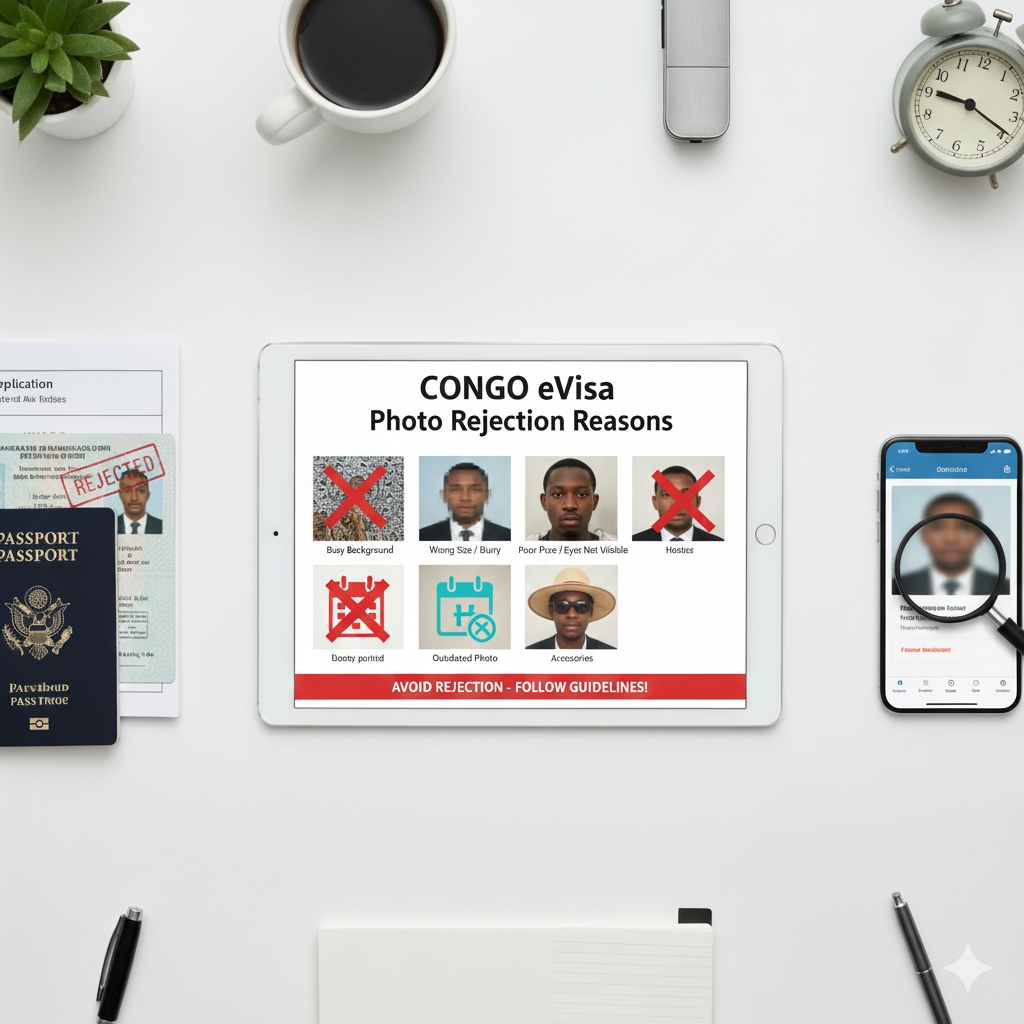
Even a tiny mistake in your photo can lead to rejection. Some common reasons for refusal are:
-
Photo background not plain or having shadows/patterns.
-
Incorrect photo size or wrong aspect ratio.
-
Blurry or low-resolution image, or poor lighting making facial details unclea.
-
Face not front-facing, head tilted, or eyes not visible.
-
Photos older than required (not recent).
-
Use of accessories (glasses, headgear) obscuring face or eyes.
-
Uploaded file in wrong format, or improper dimensions/size for digital upload.
Since the authorities rely heavily on the photo for identity verification, any deviation from the standard can raise red flags.
What Are the Photo Rules When Applying for a Congo Visa?
Let’s summarize the do’s and don’ts when you take or submit a photo for your DRC visa application:
Do:
-
Use a plain white or light-colored background (no patterns, shadows, or wrinkles).
-
Position yourself frontal to the camera, head centered and shoulders squared.
-
Keep a neutral expression, mouth closed, eyes open, looking straight ahead.
-
Make sure hair, ears, eyes — all facial features — are clearly visible.
-
Wear modest, non-white clothes (to provide contrast with the background).
-
If wearing glasses, ensure no glare, and lenses don’t block visibility of eyes.
-
Use a recent photo — taken within last 6 months.
-
Ensure high clarity/resolution, no blur, proper lighting.
-
Follow the size and dimension guidelines (e.g. 4.5 cm × 3.5 cm or 2″ × 2″).
-
Submit in required format (often JPEG) when doing online application.
-
Use photos with colored or patterned backgrounds.
-
Submit selfies with uneven lighting or shadows.
-
Wear bright or white clothes that blend with the background.
-
Tilt or turn your head; no side-profiles.
-
Use photos older than 6 months.
-
Submit images that are blurry or pixelated.
-
Use heavily edited or retouched images.
How do you renew or extend a DRC e-Visa?
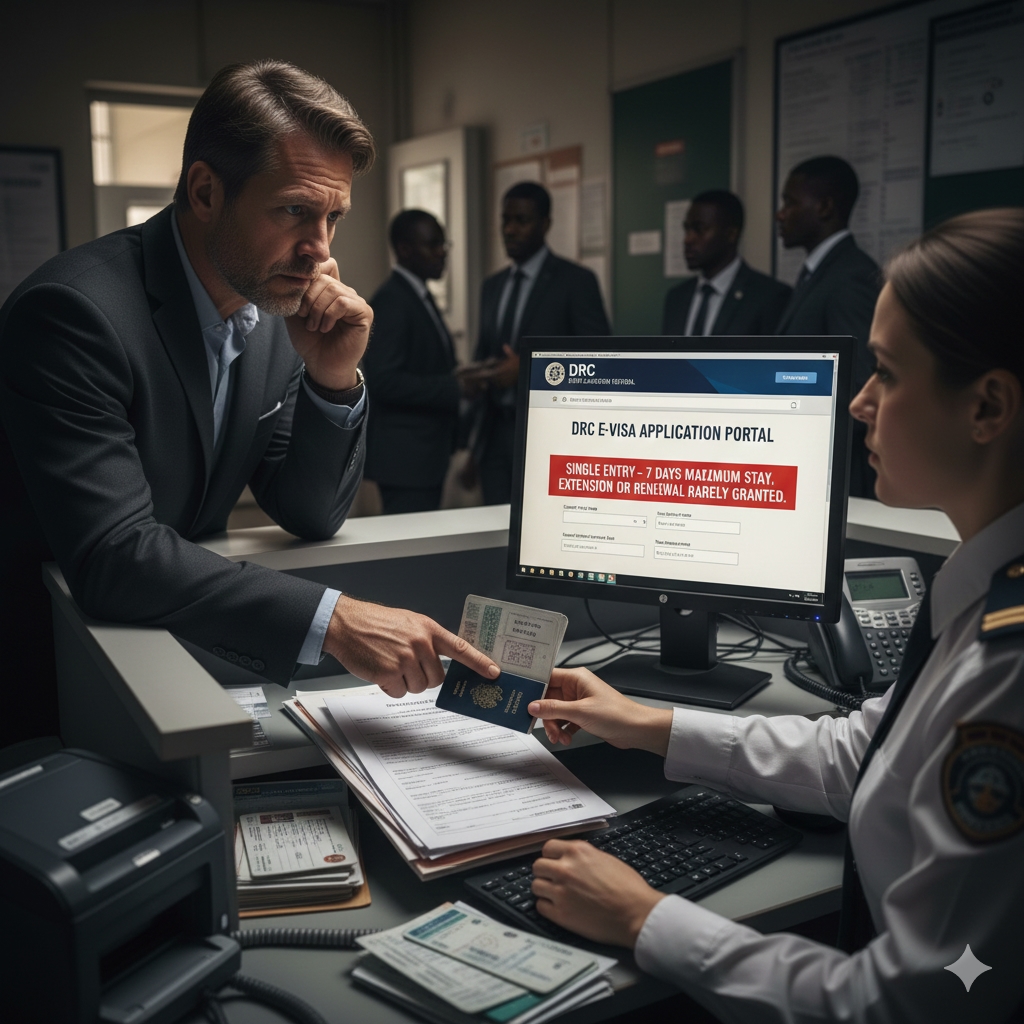
For a typical short-stay e-visa (single entry, 7-day stay under the “ordinary flying visa” type), extension or renewal is rarely standard. If you anticipate needing to stay longer than the permitted duration, it’s usually better to apply for a longer-stay visa (if eligible), or plan accordingly before travel.
Because the visa type allows a stay of up to 7 days under single-entry, if you depart and plan to re-enter, you may need to re-apply for a fresh visa. Always verify with the relevant services before travelling.
Who Needs a Multiple-Entry Visa for the Congo?
Multiple-entry visas are generally reserved for travelers who: business-travel frequently, have long-term commitments in the DRC, or need to leave and re-enter soon after their first visit. For typical tourists staying under 7 days with single entry, a standard visa suffices.
If you foresee multiple visits — or frequent short-term travel — it’s worth checking if you qualify for a multi-entry visa option before applying.
How does identity verification differ between agents and government systems?
Government systems
-
Because it is direct (applicant → government), there’s minimal “middle‑man risk.” No extra layer of private agents handling your sensitive documents or payment. That reduces scope for fraud, mishandling, or misuse of personal data.
-
Cost is usually transparent and limited to the Government visa fee — there are no “service charges” imposed by intermediaries.
-
Although sometimes Government portals may be less user‑friendly (web design, bureaucracy, limited customer‑support), the process tends to be more secure and reliable.
Agents site (like “congo‑evisa.com”)
-
The e‑Visa process is “100% online,” and supposedly takes only 3–5 minutes to fill the application.
-
Applicants just need to fill an online form, upload passport and photo, pay the fee, and — if approved — e‑Visa will be sent via email.
-
They claim the e‑Visa is convenient.
-
They advertise the application as “user‑friendly,” “efficient,” and “secure,” and mention that the e‑Visa emerges from “background checks and identity verification.”
-
They offer guidance: document upload instructions, different visa types (tourist, business, family visit, transit), payment options (card/Western Union), and supposedly “dedicated customer support.”
-
They present the service as cost‑effective and simpler — fewer steps, no paperwork, fully online.
In short: using an agent introduces convenience — but at the cost of added risk: data exposure, extra fees, and possibility of fraud or invalid applications.
Which Common Mistakes Should You Avoid When Applying for a Congo e-Visa?
Here are frequent slip-ups travellers make — avoid them:
-
Using a photo taken against a colored or busy background (wall patterns, furniture, etc.).
-
Uploading a low-quality or scanned photo with shadows or poor lighting.
-
Wearing glasses or accessories that block visibility of eyes or face.
-
Submitting an old photo (more than 6 months old).
-
Forgetting to keep ears or hair visible.
-
Submitting in wrong dimensions or incorrect format (not JPEG, too large/small file size).
-
Leaving details incomplete on application form (e.g. missing application letter, passport bio page).
-
Applying too close to travel date — giving little buffer for processing delays.
-
Not checking passport validity / blank pages — some passports may be invalid or incomplete.
What Travel Tips Should You Know Before Applying for a DRC e-Visa?
-
Take your visa photo in natural daylight, ideally near a window — avoid harsh shadows or flash glare.
-
Use a plain white sheet or background behind you if you don’t have a studio.
-
Wear non-white clothes to ensure you stand out against the background.
-
Try to get more than one acceptable photo (just in case the first gets rejected) — it’s good to have a backup.
-
Prepare all documents (passport scan, photo, application letter) well in advance — at least 3–4 weeks before travel.
-
Keep digital copies of everything, plus print-outs (passport biodata page, visa confirmation) — many airports still prefer hard copies.
-
Double-check spelling of name, passport number, dates — tiny typos can cause big problems at arrival.
-
Travel with extra passport pages — many airlines check if you have at least one blank page for visa stamp.
Conclusion: Your Hassle-Free Journey to the Congo e-Visa
Getting your Democratic Republic of the Congo eVisa Photo Requirements right might feel like a small detail — but it’s one of the most important parts of your e-visa application. A clean, clear, correctly sized photo helps you breeze through the application, and more importantly, makes your arrival smoother once you land.
If you follow the guidelines above — plain background, proper framing, good lighting, recent photo, and correct format — you’re giving yourself the best shot at approval. Plan ahead, prepare carefully, and travel with peace of mind. Congo awaits — wild, exciting, and unforgettable.
Top FAQs about the Congo e-Visa
Q: How recent must the photo be?
A: Typically within the last 6 months, to reflect your current appearance.
Q: Can I wear glasses or headgear?
A: Glasses are okay only if eyes are clearly visible (no glare or tinted lenses). Headgear is generally discouraged unless for religious purposes, and must not conceal the face.
Q: What if my photo is rejected?
A: You’ll likely need to submit a new compliant photo. That’s why having a backup is wise. Make sure you follow the guidelines exactly — background, size, clarity, lighting.
Q: What size should the photo be?
A: Commonly 4.5 cm × 3.5 cm (passport-style) — but some digital e-visa systems accept 2″ × 2″ (50 mm × 50 mm). Always check current instructions.
Q: When should I apply for the e-visa before travel?
A: As early as possible — ideally 3–4 weeks before your travel date — to account for processing times and any possible delays.


