
Pond Algae Prevention Spring 2026
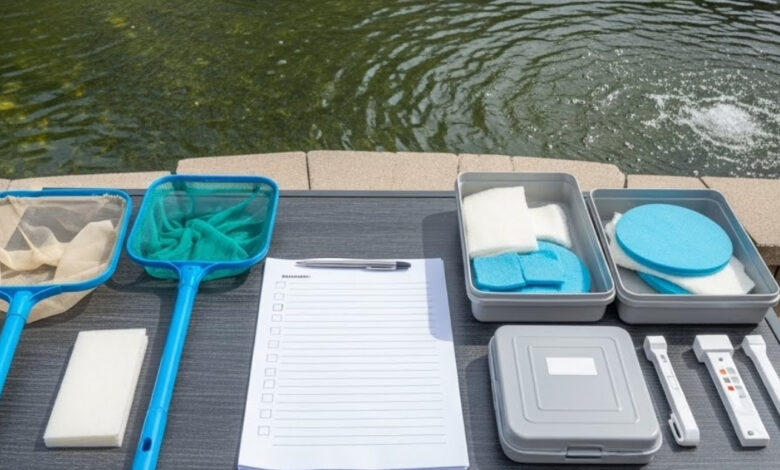
Stop Spring Algae Blooms Before They Start
Spring is beautiful unless you’re a pond owner watching your crystal-clear water turn into pea soup overnight.
Algae blooms are the #1 complaint we hear every April and May. One week your pond looks perfect. However, the next week you can’t see 6 inches below the surface. Meanwhile, string algae is covering your rocks, and you’re wondering if you’ll spend the entire summer fighting green water.
Here’s what most people don’t realize: Spring algae blooms are preventable. Unfortunately, by the time you see green water, you’re already 2-3 weeks behind. In fact, the algae has been growing invisibly, and now it’s exploding.
The good news: Five simple prevention strategies, implemented in March and early April, stop 80% of spring algae blooms before they start.
Let’s talk about why spring creates the perfect algae storm and how to prevent it.
Why Spring is Algae Season
Algae needs three things to thrive:
- Sunlight (spring days getting longer)
- Nutrients (6 months of fish waste from winter)
- Warm water (55-75°F is algae heaven)
What happens in a typical Chicago pond:
- March: Ice melts, sunlight penetrates water, nutrients are present
- Early April: Water hits 55°F, algae spores activate
- Mid-April: Water reaches 65°F, consequently algae reproduction accelerates
- Late April: Visible algae bloom appears
- May: Full-blown green water or string algae takeover
By the time you see the problem, algae has been growing for 3-4 weeks.
Therefore, the key is interrupting this cycle in March/early April before visible growth appears.
Strategy #1: Beneficial Bacteria (The Foundation)
Why it works: Beneficial bacteria consume the nutrients (nitrates, phosphates) that feed algae. As a result, no nutrients means no algae food, which ultimately means no bloom.
When to start: As soon as water reaches 45-50°F (typically early-mid April)
How to do it right:
Week 1 (when starting): First, apply a triple dose of beneficial bacteria
- Use cold-water formula (active at 40-50°F)
- Distribute around entire pond
- Additionally, apply near filter intake and returns
Weeks 2-4: Continue with double dose weekly
Weeks 5-8: Transition to normal dose weekly
All summer: Maintain with weekly maintenance dose
Product recommendations:
- Microbe-Lift Spring/Summer Cleaner
- API Pond Zyme
- Aquascape Beneficial Bacteria (Cold Water Formula)
Cost: $40-60 for season supply
Effectiveness: When started early, this approach reduces spring algae blooms by 60-70%
Common mistake: Starting bacteria AFTER you see algae. By then, you’re treating, not preventing. Instead, start in early April before algae appears.
Strategy #2: UV Clarification (The Game-Changer)
Why it works: UV light kills single-celled algae (green water) as it passes through the clarifier. Consequently, algae can’t reproduce and can’t create blooms.
Critical sizing: Most people have undersized UV units.
Minimum sizing:
- 8 watts per 1,000 gallons (basic)
- 10-12 watts per 1,000 gallons (better)
- 15+ watts per 1,000 gallons (optimal)
For example: A 3,000-gallon pond needs 24-watt UV minimum, 30-36 watt better, or 40+ watt optimal.
UV maintenance (critical for effectiveness):
- Replace bulb EVERY YEAR (they lose effectiveness even if still glowing)
- Clean quartz sleeve monthly
- Furthermore, verify proper flow rate (too fast = ineffective)
- Run 24/7 during season
When to start: Turn on UV at spring startup (mid-April), then run continuously until fall
Cost:
- New UV system: $150-400
- Annual bulb replacement: $50-90
- Nevertheless, worth every penny
Effectiveness: Prevents 90%+ of green water algae if properly sized and maintained
Important note: UV won’t stop string algae or blanket weed (these are different types). For those, use Strategies #3-5.
Strategy #3: Remove Excess Nutrients (Spring Cleaning)
Why it works: Winter leaves behind 6 months of accumulated fish waste, decomposing organic matter, and nutrient buildup. Essentially, this is algae fertilizer. Therefore, removing it removes algae’s food source.
What to remove in spring:
- Bottom sludge (2-6 inches of black muck)
- Dead plant material
- Additionally, decomposed leaves
- Finally, accumulated debris
Timing: Complete spring cleaning when water reaches 50°F+ consistently (mid-April in Chicago)
DIY or professional: Either works, but it must be thorough. Half-cleaning leaves half the nutrients, which still feeds algae.
Post-cleaning critical step: Immediately add beneficial bacteria after cleaning (triple dose). Although you’ve removed nutrients, you’ve also removed some bacteria. Consequently, reestablishing bacterial colonies fast helps beat algae.
Effectiveness: This removes 70-80% of nutrient load, dramatically cutting algae’s food supply
Strategy #4: Shade and Plants (Natural Control)
Why it works: Algae needs sunlight. Therefore, reducing sunlight reduces algae growth. Moreover, plants compete with algae for nutrients.
Target: 40-60% surface coverage
Shade options:
Floating plants (fast, effective):
- Water hyacinth (aggressive grower, excellent nutrient uptake)
- Water lettuce (fast coverage)
- Duckweed (controversial but works)
Submerged plants (nutrient competitors):
- Anacharis (oxygenator, nutrient hog)
- Hornwort (fast grower)
- Cabomba (excellent algae competitor)
Lilies (shade providers):
- Hardy water lilies (cover 4-6 sq ft per plant)
- Tropical lilies (larger coverage)
Strategic placement:
- First, focus coverage on sunniest areas
- However, don’t completely cover (fish need some sun)
- Balance aesthetics with function
Timing: Add plants in late April/early May when water is 60°F+
Cost: $50-200 for good plant coverage
Effectiveness: Through competition and shading, this reduces algae growth 30-40%
Bonus: Plants remove nutrients continuously, thereby providing ongoing algae prevention
Strategy #5: Proper Feeding (Often Overlooked)
Why it matters: Overfeeding leads to excess waste, which creates excess nutrients, ultimately fueling algae growth
The “5-minute rule”: If food is still floating after 5 minutes, you’re overfeeding. Uneaten food becomes nutrients, which subsequently becomes algae.
High-quality food matters: Cheap food has fillers that fish can’t digest fully. Consequently, more waste creates more nutrients, leading to more algae. Although quality food costs more upfront, it reduces long-term problems.
Effectiveness: Proper feeding reduces nutrient input by 20-30%, especially important in spring when biological filtration is still established.
The Combined Approach (How to Use All 5 Together)
Most effective strategy: Layer all five methods
March:
- Order supplies (bacteria, UV bulb if needed)
- Additionally, plan spring cleaning
- Research plants
Early April (when water hits 45-50°F):
- Start beneficial bacteria (triple dose)
- Schedule spring cleaning for when water hits 50°F+
- Turn on UV clarifier
Mid-April (when water hits 50°F+ consistently):
- Complete thorough spring cleaning
- Immediately add more bacteria after cleaning (triple dose again)
- Begin light fish feeding (follow temperature guidelines)
Late April/Early May:
- Add shade plants and oxygenators
- Continue weekly beneficial bacteria
- Monitor and adjust as needed
Result: Crystal clear water all season with minimal algae issues
What If You Already Have Algae?
If you’re reading this in late April and already have green water:
Immediate action plan:
- First, add beneficial bacteria (triple dose)
- Next, verify UV is working (replace bulb if 1+ years old)
- Then, do 25% water change
- Additionally, reduce feeding by 50%
- Finally, add more bacteria in 3-4 days
Timeline: You should see improvement in 5-7 days, with crystal clear water in 10-14 days
Then implement prevention strategies for the rest of the season and next spring.
Cost Breakdown: Prevention vs. Treatment
Prevention approach (March-April investment):
- Beneficial bacteria: $40-60
- UV bulb replacement: $50-90
- Spring cleaning (DIY supplies or service): $150-800
- Plants: $50-150
- Total: $290-1,100
Treatment approach (fighting algae all summer):
- Algaecides (multiple applications): $200-400
- Water clarifiers: $100-200
- Emergency services: $300-600
- Wasted time and frustration: Priceless
- Total: $600-1,200+
Clearly, prevention is cheaper, easier, and more effective than treatment.
The Bottom Line
Spring algae blooms aren’t inevitable. Rather, they’re the result of perfect conditions: sunlight + nutrients + warm water.
Break one leg of that triangle and algae can’t thrive.
The five prevention strategies work by:
- Beneficial bacteria: Remove nutrients
- UV clarification: Kill algae cells
- Spring cleaning: Remove nutrient source
- Shade/plants: Reduce sunlight, compete for nutrients
- Proper feeding: Reduce nutrient input
Start prevention in March/early April. By the time you see algae in late April or May, you’re playing catch-up all summer.
An ounce of prevention in March is worth a pound of cure in June.
Start now. Consequently, your summer self will thank you when you’re enjoying crystal-clear water while your neighbors are dumping algaecide into green ponds.


