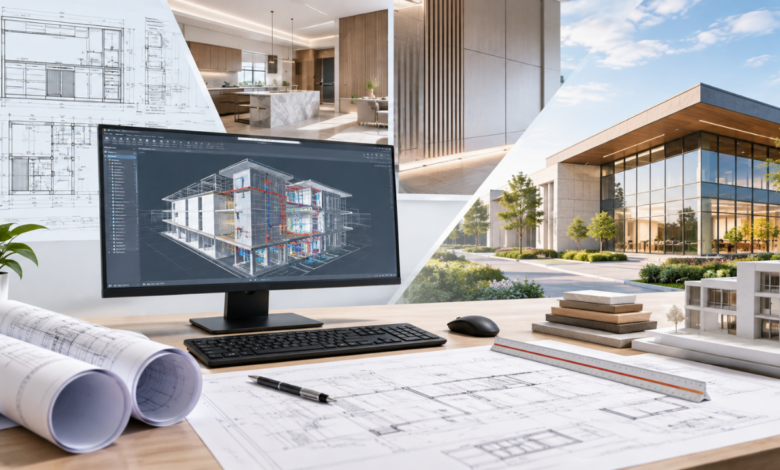
In modern commercial and high-end residential construction, the margin for error is razor-thin. Architectural woodwork and custom interiors define the character of a space, yet they are among the most complex trades to execute. A slight misalignment in a reception desk, a gap in built-in cabinetry, or an uncoordinated bulkhead can derail project schedules and inflate budgets.
While architectural design sets the aesthetic vision, it is technical documentation that bridges the gap between concept and physical reality. At the core of this translation process are millwork shop drawings. Far more than simple blueprints, these detailed technical drawings serve as the definitive manufacturing and installation roadmap, directly elevating fabrication accuracy and ensuring seamless on-site execution.
What Are Millwork Shop Drawings?
Millwork shop drawings are comprehensive technical diagrams produced by drafters or fabricators before production begins. They translate architectural design intent into exact dimensions, material specifications, joinery details, hardware callouts, and assembly methods.
Unlike basic design drawings, shop drawings account for real-world variables—such as wall out-of-plumb conditions, HVAC clearances, structural load limits, and material expansion tolerances. For general contractors, architects, and builders, reviewing and approving these drawings is the ultimate quality control checkpoint before lumber, laminate, or stone is ever cut.
How Millwork Shop Drawings Eliminate Fabrication Errors
Precision in the workshop starts with clarity on paper. When fabricators rely on ambiguous sketches or raw architectural plans, guesswork takes over, leading to costly reworks and material waste. Detailed millwork shop drawings improve fabrication accuracy in several key ways:
1. Dimensional Verification and Site Coordination
Architectural plans provide general layouts, but shop drawings provide exact dimensions tied to field measurements. By cross-referencing site conditions with manufacturing constraints, drafters catch spatial clashes early. For instance, if a custom reception millwork piece must house electrical conduits or integrate with glass partitions, the shop drawing maps these exact interfaces, preventing costly fabrication mistakes.
2. Clear Joinery, Hardware, and Material Specifications
High-end woodwork requires precise joinery (such as dowel, biscuit, or mortise-and-tenon joints) and specialized hardware. Shop drawings explicitly detail how components lock together, specifying screw placements, veneer grain directions, edge banding, and concealed fastening systems. This ensures the shop floor team executes the build exactly as engineered, maintaining structural integrity and aesthetic continuity.
3. Standardized Cross-Functional Communication
A successful millwork package requires alignment between the architect, general contractor, interior designer, and workshop fabricator. Shop drawings establish a single source of truth. When every stakeholder reviews and signs off on the same set of detailed elevations, sections, and isometric blowups, miscommunications regarding sizing, finishes, or operability are eliminated.
Real-World Impact: From Workshop to Jobsite
Consider the installation of a multi-story custom commercial boardroom credenza and integrated wall paneling. Without detailed shop drawings, the fabrication team might build panels based solely on theoretical wall dimensions. Upon delivery, uneven drywall or structural deflection could leave unsightly gaps.
With comprehensive shop drawings produced by experienced professionals utilizing professional millwork drafting services, the drawings would incorporate scribe allowances, adjustable mounting cleats, and pre-engineered ventilation grilles. The result? Flawless installation, zero emergency site modifications, and adherence to tight project timelines.
Conclusion
In the competitive landscape of modern construction, precision is synonymous with profitability. Investing time upfront in accurate, thoroughly coordinated millwork shop drawings protects builders and contractors from expensive errors, material waste, and project delays. By transforming creative architectural visions into error-free fabrication guidelines, detailed shop drawings ensure that every piece of custom woodwork fits, functions, and impresses from day one.