Understand Normal Heart Rate During Workout, Sleep and Stress
Measuring Healthy Heart Rate during workout
When it comes to assessing health, the last generation had it pretty simple compared to the current time. Back then, most of us had fairly simple measures to check. Step on a weighing scale, get your BP checked once every 6 months, and take care of your diet. And that was pretty much it.
Today, however, things are much more complex and holistic. Apart from diet and basic health parameters, heart rate has become a key health indicator. Fitness gadgets, including fitness watches and smart rings connected to health apps, have made it a habit to check the heart rate many times a day. We check it right after waking up, during our workouts, and before we go off to sleep.
What Is A Healthy Heart Rate
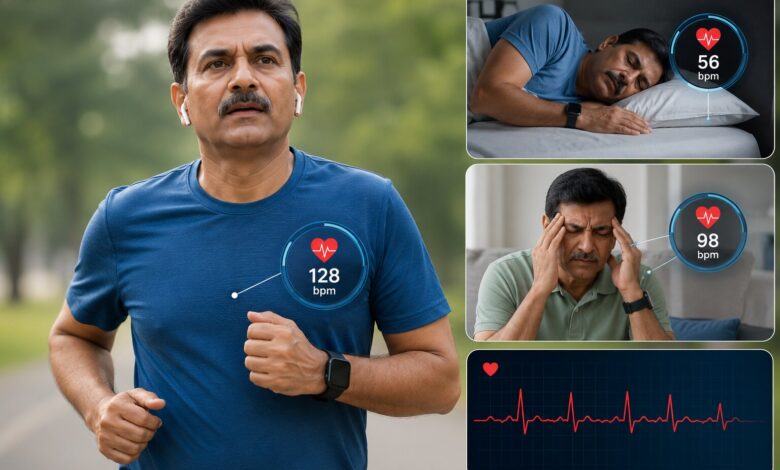
A healthy heart rate has no such definition. It depends on your activity and your feelings. The reason being, unlike other parameters of the body, the heart rate is constantly changing. It changes depending on what the body and the mind are going through. When you’re sitting, your heart rate is slower compared to when you’re running or cycling. When you’re sleeping, your heart beats slower; when you’re stressed, it beats faster. A surprise, a shock, or a trauma, they all make the heart beat faster, without you having to move a little bit. Precisely the reason why it is imperative to find your healthy heart rate.
What Is A Normal Heart Rate
Your resting heart rate is the first parameter of good heart health. When you’re not doing physical activity, your heart beats at a steady pace known as your resting heart rate. The normal range for resting heart rate is between 60 and 100 beats per minute. It is to note that as the age increases, the normal heart rate range also changes, for instance, for a 55-year-old individual, it is 83 to 140 beats per minute, as for a 70-year-old, 75 – 128 is considered normal.
An increase in an individual’s resting heart rate, without any physical activity, is a strong sign of a heart complication. The best time to measure your resting heart rate is right after waking up in the morning, in a calm state of mind. The stronger the heart beats, the slower. The reason why the athletes’ resting heart rate is lower than that of normal people.
Heart Rate During Workout: The Maximum Heart Rate
The speed of the heartbeat indicates your heart health. It also depends on what physical activity has been done and accordingly measured at what condition specific heartbeat is normal, like while doing a workout, sleeping, and resting. Heart rate also depends on factors including age, a person’s overall health, and their workout intensity.
According to your age, the easiest way to calculate your maximum heart rate (MHR) is to deduct your age from 220. During a moderate workout session, it is advised to go at 50% to 70% of your estimated maximum heart rate.
How To Monitor Your Resting Heart Rate
There are several types of heart rate monitors readily available in the market, including chest straps, wristbands, and smartwatches. A heart rate monitor can provide real-time feedback on your heart rate during workout routines, allowing you to adjust your intensity accordingly.
Another effective way to measure your heart rate is by checking your pulse manually. You can do this by placing two fingers on your wrist or neck pulse and counting the beats/ throbbing that you feel for 1 minute. To measure your maximum heart rate, take your pulse immediately after your workout session.
How To Improve Heart Rate
With a small, consistent, healthy lifestyle to protect and keep our hearts healthy, we could keep our hearts stronger, our heart rate healthier, and achieve all our health goals.
- Exercise every day. Train your heart better.
- Manage your stress better to improve your resting heart rate.
- Quit smoking.
- Maintain a healthy weight. It improves your resting heart rate.
Take it Slow & Steady to Get to Your Maximum
Your heart rate is an excellent indicator of whether you’re on the right path to meeting your desired fitness and health goals. A simple test you could carry out anytime during your workout, without the help of any technology, is whether you’re able to talk during your workouts, you’re doing well. While exercising, when your heart is beating faster and you’re breathing heavier but can still talk properly or carry out a full conversation, that is a sign that you’re on the right track. It’s always good to know more about how to improve heart rate: take it slow and keep it steady, and you will get to your maximum in a healthier, proper way. To do that effectively, consult your cardiologist and ask them to make a heart-healthy exercise plan for you.