Medical Representative Job: A Step-by-Step Career Guide for Freshers
Explore the essential steps to kickstart your career as a Medical Representative. This comprehensive guide offers insights for freshers to succeed in the industry.
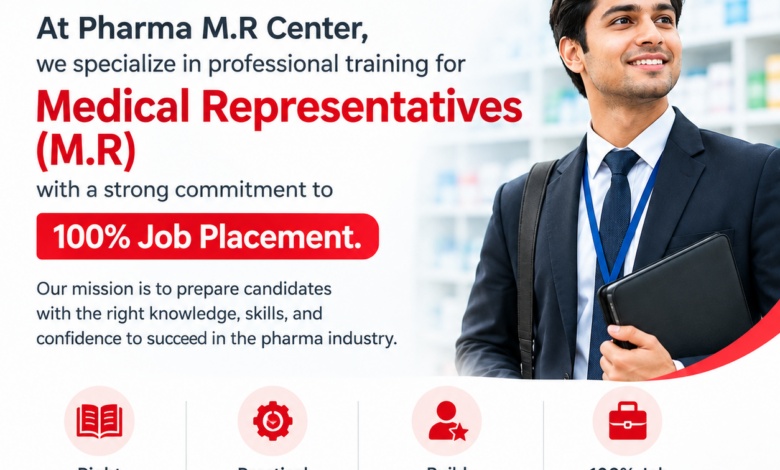
Starting your first job after graduation can be both exciting and confusing. Freshers often know they want to enter the pharmaceutical industry but are not always sure which role to choose, what skills employers expect, or how to prepare for interviews. A Medical Representative Job can be one of the entry-level career options for candidates who are interested in pharmaceutical sales, healthcare communication, fieldwork, and professional relationship building.
A medical representative generally works with a pharmaceutical company and communicates approved product information to healthcare professionals. The role can involve regular travel, territory management, product learning, reporting, customer interaction, and meeting assigned business objectives.
For a fresher, preparation can make the transition into this profession much easier. Academic qualifications provide a foundation, but practical communication, product knowledge, confidence, discipline, and field awareness are also important.
Candidates who want structured preparation may consider a medical representative training course before applying. A suitable training programme can introduce the basic responsibilities of the profession and provide opportunities to practise communication, product presentation, interview skills, and field situations.
If you are based in Delhi, researching a medical representative institute in Delhi can also help you understand what type of practical training is available before making a career decision.
Step 1: Understand What a Medical Representative Does
Before applying for a job, understand the actual responsibilities of the position.
A medical representative may be responsible for:
- Visiting healthcare professionals
- Communicating approved product information
- Maintaining professional relationships
- Planning daily field visits
- Managing an assigned territory
- Recording customer interactions
- Preparing reports
- Following up with customers
- Working toward company objectives
The exact responsibilities depend on the organisation and product portfolio.
The role is not simply about convincing someone to purchase a product. Pharmaceutical communication requires accuracy, preparation, professional conduct, and an understanding of approved product information.
A fresher should therefore learn about the profession before deciding whether it matches their interests and personality.
Step 2: Check Your Educational Eligibility
Educational requirements vary between pharmaceutical companies and individual positions.
Depending on the employer, candidates with backgrounds such as B.Pharm, D.Pharm, life sciences, biotechnology, microbiology, chemistry, biochemistry, or other relevant qualifications may find different opportunities.
Some organisations may have broader graduate requirements for sales positions, while technical pharmaceutical roles can require specific qualifications.
Read each vacancy carefully instead of assuming that every company follows the same eligibility criteria.
Your academic background is important, but it is only one part of your overall profile.
Step 3: Develop Basic Pharmaceutical Knowledge
Product knowledge is one of the most important areas for anyone preparing for a Medical Representative Job.
A representative may need to understand the products promoted by their employer and communicate information accurately.
Before applying, become familiar with basic concepts such as:
- Pharmaceutical terminology
- Therapeutic categories
- Dosage forms
- Product composition
- Approved indications
- Precautions
- Contraindications
- Basic medical terminology
Freshers are not expected to know every pharmaceutical product available in the market. However, they should demonstrate an ability to understand scientific information and learn new products.
Most importantly, never make unsupported medical claims simply to sound knowledgeable.
Step 4: Improve Your Communication Skills
Communication is a major part of pharmaceutical fieldwork.
A representative may interact with doctors, pharmacists, distributors, managers, and other healthcare professionals. These interactions require clarity, confidence, patience, and professionalism.
Practise:
- Introducing yourself
- Speaking clearly
- Listening carefully
- Asking relevant questions
- Explaining information briefly
- Handling questions respectfully
- Maintaining professional body language
You do not need complicated English to become an effective representative.
The ability to communicate information clearly and respectfully is generally more valuable than using difficult vocabulary.
Step 5: Learn Basic Sales Skills
A Medical Representative Job also involves understanding fundamental sales principles.
A fresher should learn how professional sales differs from aggressive selling.
Important areas include:
- Understanding customer needs
- Product presentation
- Building professional relationships
- Handling questions
- Responding to objections
- Following up
- Maintaining customer records
- Understanding sales objectives
The emphasis should always remain on ethical and responsible communication.
Long-term professional relationships are important in field-based pharmaceutical work.
Step 6: Consider a Medical Representative Training Course
Freshers who have never worked in pharmaceutical sales may benefit from structured preparation.
A medical representative training course can introduce candidates to the practical aspects of the profession before they enter the workplace.
Depending on the programme, training may cover:
- Pharmaceutical basics
- Product knowledge
- Communication skills
- Product presentation
- Sales fundamentals
- Territory management
- Field reporting
- Professional behaviour
- Interview preparation
- Role-playing exercises
When comparing courses, do not focus only on the certificate.
Look for programmes that provide practical activities, mock interactions, communication practice, and realistic examples of field situations.
The objective should be skill development rather than simply completing a course.
Step 7: Research a Medical Representative Institute in Delhi
Candidates based in Delhi may find several training options, but the quality and approach of each programme can differ.
Before selecting a medical representative institute in Delhi, consider:
Course Curriculum
Check whether the curriculum covers both pharmaceutical knowledge and practical field skills.
Practical Training
Ask whether trainees participate in role plays, product presentations, mock doctor calls, or other practical exercises.
Trainers
Understand whether trainers have relevant pharmaceutical sales or industry experience.
Interview Preparation
A useful institute should help candidates understand common interview questions and improve professional communication.
Career Support
If placement assistance is advertised, ask what it actually includes. Training should not be treated as an automatic guarantee of employment.
Choosing a programme based on practical value can be more useful than choosing one simply because it offers a certificate.
Step 8: Develop Fieldwork Skills
One of the biggest differences between a pharmaceutical field position and an office job is the amount of movement involved.
A representative may travel between different locations throughout the day.
Learn how to:
- Plan daily visits
- Estimate travel time
- Organise appointments
- Maintain customer lists
- Follow up professionally
- Record field activities
- Manage unexpected schedule changes
Delhi’s traffic and busy schedules can make time management particularly important for field professionals.
A fresher should be prepared for the practical realities of travelling within an assigned territory.
Step 9: Learn Territory Management
Territory management involves organising professional activities within an assigned geographical area.
A representative may have multiple healthcare professionals, pharmacies, distributors, or institutions to manage.
Good territory planning can help reduce unnecessary travel and improve daily productivity.
During training or preparation, practise creating a simple daily schedule based on:
- Location
- Appointment timing
- Customer priority
- Travel distance
- Follow-up requirements
This type of practical exercise can make the transition to a real Medical Representative Job easier.
Step 10: Prepare a Fresher Resume
Your resume does not need to contain years of experience.
Instead, focus on what you can genuinely demonstrate.
Include:
- Educational qualifications
- Internships
- Academic projects
- Relevant training
- Certifications
- Technical knowledge
- Communication skills
- Computer skills
- Achievements
If you have completed a medical representative training course, mention the relevant skills or practical activities you developed rather than simply listing the course title.
Never create fictional employment experience.
An honest, focused resume is much more useful during an interview.
Step 11: Prepare for the Interview
Interview preparation should begin before you start applying.
For a Medical Representative Job, employers may ask questions about your education, communication ability, pharmaceutical knowledge, fieldwork, and career goals.
Common questions may include:
- Why do you want to join pharmaceutical sales?
- Why are you interested in this company?
- What does a medical representative do?
- Are you comfortable with fieldwork?
- How would you approach a busy doctor?
- How would you handle rejection?
- What do you know about our products?
- What are your strengths?
- Are you comfortable travelling?
Do not memorise complicated answers.
Understand the role and answer honestly.
Step 12: Learn Professional Behaviour
Professional behaviour can influence how healthcare professionals and managers perceive you.
Important habits include:
- Being punctual
- Dressing appropriately
- Speaking respectfully
- Listening carefully
- Keeping commitments
- Maintaining accurate records
- Avoiding unsupported claims
- Respecting professional boundaries
A representative represents the organisation during every interaction.
Professionalism therefore matters as much as product knowledge.
Step 13: Understand Salary and Travel Conditions
Do not accept an offer based only on the salary figure.
Ask about:
- Fixed salary
- Incentives
- Travel allowance
- Reimbursement
- Working hours
- Assigned territory
- Reporting requirements
- Probation
- Leave policy
- Performance expectations
Travel can be a significant part of pharmaceutical sales.
Before accepting a position, understand whether transportation is provided, whether expenses are reimbursed, and how large the assigned territory will be.
Step 14: Verify the Employer
Freshers should be careful when applying for jobs.
Before accepting an offer, research the organisation and verify:
- Company identity
- Office location
- Job responsibilities
- Salary structure
- Working conditions
- Joining procedure
- Reporting manager
- Required documents
Be particularly cautious if someone promises a guaranteed job in exchange for an unusual payment.
A legitimate employment opportunity should provide clear information about the position and employment conditions.
Step 15: Focus on Learning After Joining
Getting your first job is only the beginning.
During the first few months, focus on learning:
- Company products
- Territory requirements
- Reporting systems
- Customer communication
- Daily planning
- Performance expectations
- Professional procedures
Observe experienced colleagues and learn from constructive feedback.
The skills developed during the first year can influence future opportunities in pharmaceutical sales and related areas.
Career Growth After a Medical Representative Job
A Medical Representative Job can provide experience that becomes useful for future career development.
Depending on performance, qualifications, experience, and company structure, professionals may later explore roles such as:
- Senior medical representative
- Area sales roles
- Sales management
- Product-related positions
- Training and development
- Pharmaceutical marketing
- Business development
- Other healthcare and pharmaceutical functions
Career progression is not automatic, but consistent performance, learning, and professional development can create more opportunities over time.
Final Checklist for Freshers
Before applying, make sure you have:
- Reviewed your educational eligibility
- Learned basic pharmaceutical terminology
- Improved communication skills
- Practised product presentation
- Understood fieldwork
- Developed basic digital skills
- Prepared a fresher resume
- Researched potential employers
- Practised interview questions
- Understood salary and travel conditions
- Considered practical training
- Prepared yourself for continuous learning
Conclusion
Starting a Medical Representative Job can be a practical entry point into the pharmaceutical industry for candidates who enjoy communication, fieldwork, professional interaction, and continuous learning. However, freshers should understand that the role requires more than an academic qualification.
Developing pharmaceutical knowledge, communication skills, territory-management abilities, digital confidence, professional behaviour, and interview readiness can make the transition into the industry smoother.
A well-structured medical representative training course can provide useful preparation, particularly when it includes practical exercises rather than only theoretical lessons. Candidates in Delhi can also compare a medical representative institute in Delhi based on curriculum, trainers, practical exposure, interview preparation, and genuine career support.
Most importantly, treat your first job as the beginning of your professional development. Continue learning after joining, accept feedback, communicate responsibly, and build strong professional habits. With preparation and consistent effort, a fresher can develop the skills needed to build a sustainable career in pharmaceutical sales.