
Fading, Cracking, or Discoloration? Find the Cause with a UV Weathering Tester
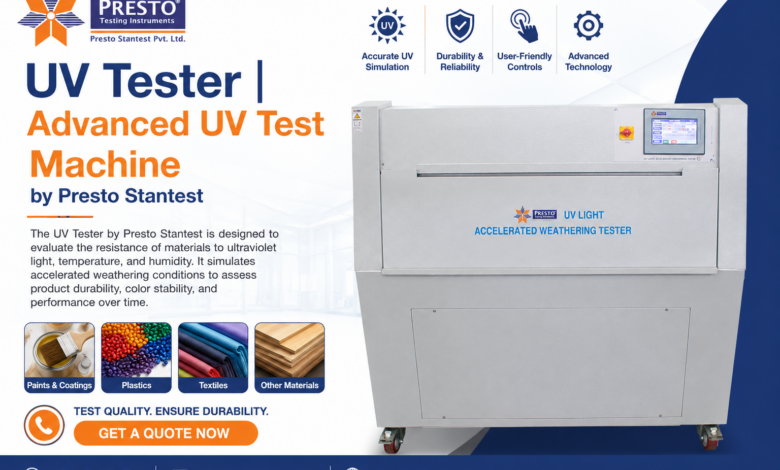
Outdoor products are constantly exposed to sunlight, heat, moisture, and changing environmental conditions. Over time, this exposure can cause materials to fade, crack, become brittle, lose gloss, or change their physical properties. These changes can reduce product life and affect customer satisfaction. A UV Weathering Tester helps manufacturers understand how materials respond to accelerated exposure and identify potential causes of weather-related deterioration before products are released into the market.
Why UV Weathering Testing Is Important
Natural sunlight can take months or years to produce visible changes in a product. Waiting for natural exposure is often impractical for manufacturers developing new materials or improving existing products. Accelerated laboratory testing provides a controlled way to reproduce important weathering conditions and obtain useful performance information in a shorter period.
A UV Test Chamber exposes test specimens to controlled ultraviolet radiation and other environmental conditions. Manufacturers can use the resulting data to compare materials, evaluate formulations, and understand how products may perform during outdoor use.
This type of testing is particularly useful for plastics, coatings, paints, textiles, automotive components, construction materials, packaging, and other products expected to withstand environmental exposure.
What Causes Fading, Cracking, and Discoloration?
Ultraviolet radiation can initiate chemical changes within many materials. When polymers, pigments, coatings, and other components absorb UV energy, their molecular structure may gradually deteriorate. Depending on the material, this degradation can result in fading, surface cracking, chalking, brittleness, gloss loss, or discoloration.
Moisture and temperature can further influence the degradation process. A product exposed to sunlight and humidity may behave differently from one exposed only to UV radiation. For this reason, accelerated weathering tests often combine controlled UV exposure with condensation or moisture cycles.
A UV Weathering Chamber allows manufacturers to reproduce these conditions under controlled laboratory settings and compare the performance of different materials.
How Does a UV Test Machine Work?
A UV Test Machine generally uses specialized UV lamps to simulate the damaging portion of sunlight. Test specimens are positioned inside the chamber at controlled distances from the lamps. The equipment can be programmed to provide specific exposure cycles according to the testing requirements.
Depending on the application, testing may involve alternating UV exposure and moisture or condensation periods. Temperature can also be controlled to create repeatable environmental conditions.
After a defined exposure period, specimens can be examined for changes in color, gloss, surface appearance, cracking, chalking, strength, or other relevant properties. Comparing exposed samples with unexposed specimens helps manufacturers evaluate the extent of degradation.
Applications of a UV Environmental Test Chamber
A UV Environmental Test Chamber can be useful across numerous industries. Plastic manufacturers can evaluate the weatherability of polymers and molded components. Paint and coating manufacturers can study color stability and surface deterioration. Automotive companies can test exterior components, finishes, and materials intended for outdoor conditions.
Construction-product manufacturers may use UV exposure testing to evaluate roofing materials, profiles, panels, sealants, and other products exposed to sunlight. Packaging companies can investigate the durability of films and printed surfaces.
By conducting controlled environmental testing during product development, manufacturers can identify weaknesses and improve material selection before large-scale production.
Benefits of a UV Accelerated Weathering Tester
A UV Accelerated Weathering Tester provides several benefits for research and quality-control laboratories. Controlled exposure makes it possible to compare different materials under consistent conditions. This can help manufacturers identify which formulations provide better resistance to UV-related degradation.
Accelerated testing can also support product development by allowing engineers to evaluate new materials without waiting for long-term natural exposure. When combined with visual and physical measurements, test results can provide valuable information about material durability.
The test process can also help manufacturers establish internal quality requirements and monitor consistency between production batches.
Choosing a UV Light Weathering Tester
When selecting a UV Light Weathering Tester, manufacturers should consider factors such as UV lamp type, exposure control, temperature range, moisture or condensation capabilities, sample capacity, control system, and overall chamber construction.
The testing requirements of the material should determine the equipment configuration. Laboratories should also consider ease of operation, repeatability, maintenance requirements, and technical support.
A suitable tester should provide stable and controlled exposure conditions so that test results can be compared reliably. Proper specimen preparation and consistent evaluation methods are equally important for obtaining meaningful results.
Why Choose PrestoGroup?
PrestoGroup provides laboratory testing solutions designed to help manufacturers evaluate material performance and product durability. Its weathering testing equipment can support industries that need controlled evaluation of materials exposed to ultraviolet radiation and environmental conditions.
Using a UV Weathering Tester from a reliable manufacturer can help laboratories establish consistent testing procedures for research, development, and quality control. PrestoGroup focuses on practical testing solutions that support accurate measurement, repeatable results, and efficient laboratory operation.
For companies developing products intended for outdoor applications, incorporating UV weathering evaluation into the quality-control process can provide useful information about long-term material behavior.
Identify Material Weaknesses Before Customers Do
Fading, cracking, and discoloration are often visible signs of deeper material degradation. Instead of waiting for these problems to appear after months of outdoor exposure, manufacturers can use accelerated laboratory testing to investigate material performance earlier.
A UV Test Chamber, UV Weathering Chamber, or UV Accelerated Weathering Tester can help companies compare formulations, identify vulnerable materials, and improve product durability. The information generated during testing can support better decisions regarding raw materials, coatings, additives, and product design.
Conclusion
UV exposure can significantly influence the appearance and performance of products designed for outdoor environments. Fading, cracking, discoloration, chalking, and loss of mechanical properties can all indicate that a material is not sufficiently resistant to environmental exposure.
Using a UV Weathering Tester provides manufacturers with a controlled method for evaluating these effects. From a UV Test Machine and UV Weathering Chamber to a UV Environmental Test Chamber and UV Light Weathering Tester, the right testing solution can help manufacturers understand material behavior and improve product reliability.
With PrestoGroup’s testing solutions, manufacturers can strengthen their quality-control and product-development processes by evaluating UV resistance under controlled laboratory conditions. Early identification of weathering-related weaknesses can help reduce product failures, improve durability, and increase confidence in products intended for long-term outdoor use.


