
Various Types of Springs and Their Key Functions
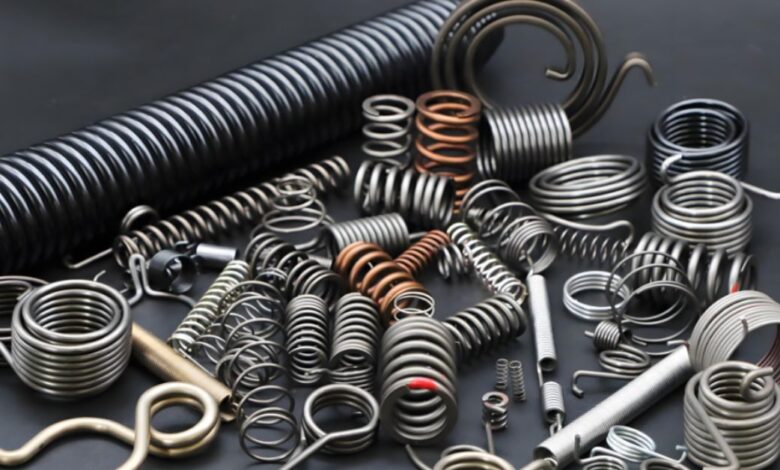
Springs may look simple, but they play a powerful role in countless machines and everyday products. From absorbing shocks to maintaining tension and enabling smooth motion, springs are essential components in mechanical and industrial systems. Understanding the various types of springs and their key functions helps engineers and manufacturers choose the right solution for performance, safety, and durability.
What Are Springs and Why Are They Important?
A spring is a mechanical component designed to store energy when force is applied and release it when the force is removed. This ability makes springs crucial in applications that require flexibility, load control, vibration absorption, or motion support. Many industries rely on a trusted Spring Manufacturer in Chennai to deliver precision-engineered springs that meet exact operational and quality requirements.
Compression Springs
Compression springs are one of the most widely used types of springs, specifically designed to withstand compressive forces and return to their original shape once the load is released. They are commonly utilized in automotive suspensions, industrial machinery, valves, and electrical equipment. Their primary functions include absorbing shocks, supporting loads, and maintaining proper spacing between components.
Tension Springs
Tension springs, also known as extension springs, operate by absorbing energy when stretched. They are manufactured with end hooks or loops to attach securely to other components. Reliable Tension Springs Suppliers provide these springs for applications such as garage doors, agricultural equipment, fitness machines, and mechanical assemblies. Their primary function is to deliver controlled pulling force and restore components to their original position.
Torsion Springs
Torsion springs work by twisting rather than compressing or stretching. They store energy through rotational force and release it when the force is removed. Commonly used in hinges, clamps, and automotive mechanisms, torsion springs help control angular movement and maintain balance in rotating systems.
Leaf Springs
Leaf springs are flat, layered springs mainly used in vehicle suspension systems, especially in heavy-duty trucks. They support heavy loads, absorb road shocks, and maintain axle alignment. Known for their strength and durability, leaf springs are ideal for demanding industrial and automotive applications.
Spiral Springs
Spiral springs are flat strips of metal wound into a spiral shape. They are commonly used in watches, clocks, and seat belt retractors. Their main function is to store rotational energy and release it smoothly, ensuring consistent motion over time.
Choosing the Right Spring Type
Selecting the correct spring depends on load capacity, operating environment, space limitations, and motion requirements. Working with experienced manufacturers ensures the spring performs reliably and meets industry standards. Quality spring design directly impacts the efficiency and lifespan of mechanical systems.
Materials Used in Spring Manufacturing
The performance of a spring largely depends on the material used in its production. Common materials include stainless steel, carbon steel, alloy steel, and phosphor bronze, each chosen based on strength, corrosion resistance, and operating conditions. High-quality materials ensure springs can withstand repeated stress, temperature variations, and demanding industrial environments without losing efficiency.
Importance of Precision and Quality Standards
Precision plays a crucial role in spring performance, as even minor variations can affect load capacity and durability. Accurate design, controlled manufacturing processes, and strict quality checks help maintain consistency across batches. Industries rely on springs that meet exact specifications to avoid equipment failure, downtime, and maintenance issues.
Applications Across Multiple Industries
Conclusion
Each type of spring serves a specific function, from absorbing force to controlling motion and supporting heavy loads. Understanding their applications helps industries select the right solution for optimal performance. With the support of skilled suppliers and manufacturers, springs continue to be a vital component in modern engineering and industrial design.


