
The Complete Digital Marketing Audit Checklist for Businesses
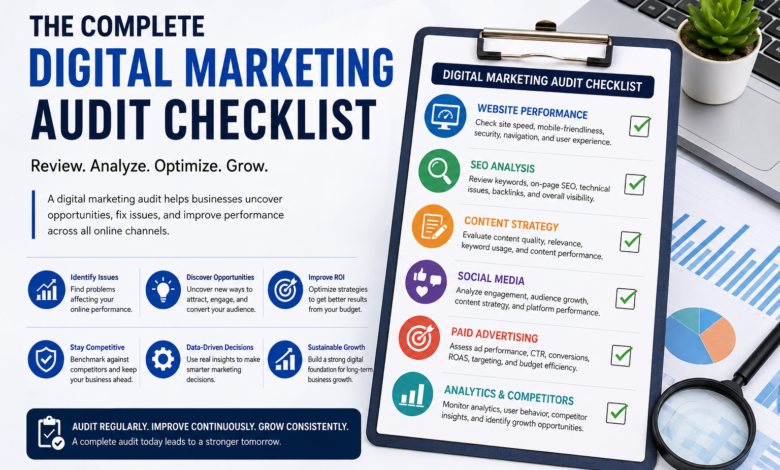
In today’s competitive online marketplace, having a digital presence is no longer enough. Businesses must continuously evaluate their websites, SEO strategies, content, social media performance, and advertising efforts to stay ahead of competitors. This is where a comprehensive digital marketing audit becomes essential.
A digital marketing audit is a complete review of your online activities to identify strengths, weaknesses, and opportunities for improvement. Whether you manage your marketing internally or work with professionals offering white label SEO audit services, a well-structured audit helps you make data-driven decisions that improve visibility, engagement, and conversions.
This complete checklist covers the key areas every business should analyze to achieve better digital marketing results.
1. Evaluate Your Website Performance and User Experience
Your website is the foundation of your digital marketing strategy. If it loads slowly, has navigation issues, or provides a poor user experience, potential customers may leave before taking action.
Begin your website audit by checking:
- Page loading speed and mobile responsiveness
- Website security and SSL certification
- Easy-to-use navigation and site structure
- Broken links and technical errors
- Conversion elements such as forms and call-to-action buttons
A fast, user-friendly website improves customer satisfaction and supports better search engine rankings. Regular monitoring ensures that technical issues do not negatively affect your marketing efforts.
2. Conduct a Detailed SEO Audit
Search engine optimization is one of the most important components of a successful digital strategy. A detailed SEO audit helps identify problems preventing your website from reaching its full ranking potential.
Key SEO areas to analyze include:
- Keyword targeting and search intent alignment
- Meta titles and descriptions optimization
- Heading structure and content quality
- Internal linking strategy
- Image optimization and alt text
- Crawl errors and indexing issues
- Backlink quality and authority
Businesses with multiple locations should also perform an audit SEO local strategy to review local rankings, Google Business Profile optimization, local citations, and customer reviews.
Many agencies use white label SEO audit services to deliver professional reports and advanced SEO insights without investing in additional in-house resources.
3. Review Your Content Marketing Strategy
Content plays a major role in attracting visitors, building trust, and converting potential customers into loyal clients. However, not every piece of content delivers the desired results.
Review your content by asking these questions:
- Is the content relevant to your target audience?
- Does it answer customer questions effectively?
- Are keywords naturally integrated?
- Is old content updated with accurate information?
- Are blogs, videos, and landing pages generating traffic?
Analyzing content performance allows businesses to identify high-performing pages and improve content that is underperforming.
4. Analyze Your Social Media Presence
Social media platforms provide valuable opportunities to connect with audiences and strengthen brand awareness. A social media audit helps determine whether your efforts align with business objectives.
Important areas to examine include:
- Profile completeness and brand consistency
- Audience growth and engagement rates
- Performance of different content formats
- Posting frequency and timing
- Traffic generated from social platforms
Businesses should focus on platforms where their ideal customers are most active rather than trying to maintain a presence everywhere.
5. Assess Paid Advertising Campaign Performance
Paid advertising can generate quick traffic and leads, but poor campaign management can result in wasted budget. A marketing audit should carefully review all paid channels, including search ads, display ads, and social media advertising.
Check the following metrics:
- Return on advertising investment (ROAS)
- Click-through rates (CTR)
- Cost per click (CPC) and cost per conversion
- Audience targeting accuracy
- Ad copy and creative performance
Regular optimization helps ensure that advertising budgets are spent effectively and contribute to overall business growth.
6. Monitor Analytics, Competitors, and Future Opportunities
A digital marketing audit is incomplete without reviewing performance data and industry competition. Analytics provide insights into customer behavior and reveal areas where improvements are needed.
Track essential metrics such as:
- Website traffic sources
- Bounce rates and session duration
- Conversion rates
- Customer journey patterns
- Top-performing pages and campaigns
Competitor analysis also helps identify market trends, content gaps, and SEO opportunities. By comparing your digital performance against competitors, you can develop strategies that provide a stronger online advantage.
Final Thoughts
A successful digital marketing strategy requires continuous evaluation and improvement. A complete digital marketing audit helps businesses uncover technical problems, optimize SEO, improve content quality, enhance social media engagement, and maximize advertising performance.
From conducting a detailed SEO audit to implementing an effective audit SEO local strategy, every aspect of your digital presence should be reviewed regularly. Companies looking to scale their services can also benefit from white label SEO audit services to gain professional insights and deliver high-quality SEO solutions efficiently.
By following this checklist, businesses can create a stronger digital foundation, increase online visibility, and achieve sustainable long-term growth.


